
What to Do in Aegina in 10 days – from Five Star Greece
Aegina is one of the most rewarding Greek islands to explore slowly. Just 30–40 minutes from Athens by ferry, it offers a rare combination of ancient archaeology, living island traditions, pine-covered hills, pilgrimage sites, walkable villages, and a world-famous pistachio culture – all without the gloss or crowds of more heavily touristed islands.
This 10-day Aegina itinerary is designed for travellers who value depth over box-ticking. It mixes archaeology, coastal walking, food, art, rural landscapes, and everyday island life, and is ideal for those who miss Greece as it once was, before curated became a word used outside of museums.
Why Aegina Still Feels Real – The un-Disneyfied island
Let me begin by saying that what really illuminates the special character of Aegina is the number of orthopaedic shoe shops, children’s clothes stores, and art supply shops. I realise this sounds like faint praise, but bear with me… you will understand how highly this is to be valued once you’ve read the rest of this article. Trust me. The Five Star Team have asked me not to write this but I am the boss…
Aegina sits firmly within the Athens commuter belt – just a short 30-minute, frequent high-speed ferry ride from Piraeus. As such, it tends to get overlooked as little more than a long-weekend escape or a day trip to the Doric Temple of Aphaia before heading straight back to the mainland.
Yachts do stop there as they know the beautiful places to anchor and swim – you can charter a yacht with us if you wish to explore by sea – but the hoi polloi (not Five Star Greece guests, of course) and somewhat snobbish Greeks rarely give it serious thought.
This is their loss.
This guide is written for those who yearn for Greece as it felt 50 years ago, for travellers who are curious and love discovering the underrated, and for anyone who has seen enough Cycladic whitewashed cubic villages and Disneyfied harbour waterfronts and would quite like to see something more real.
Day 1 – Explore Aegina Town & the Working Harbour
A Neoclassical Waterfront That Still Works for a Living
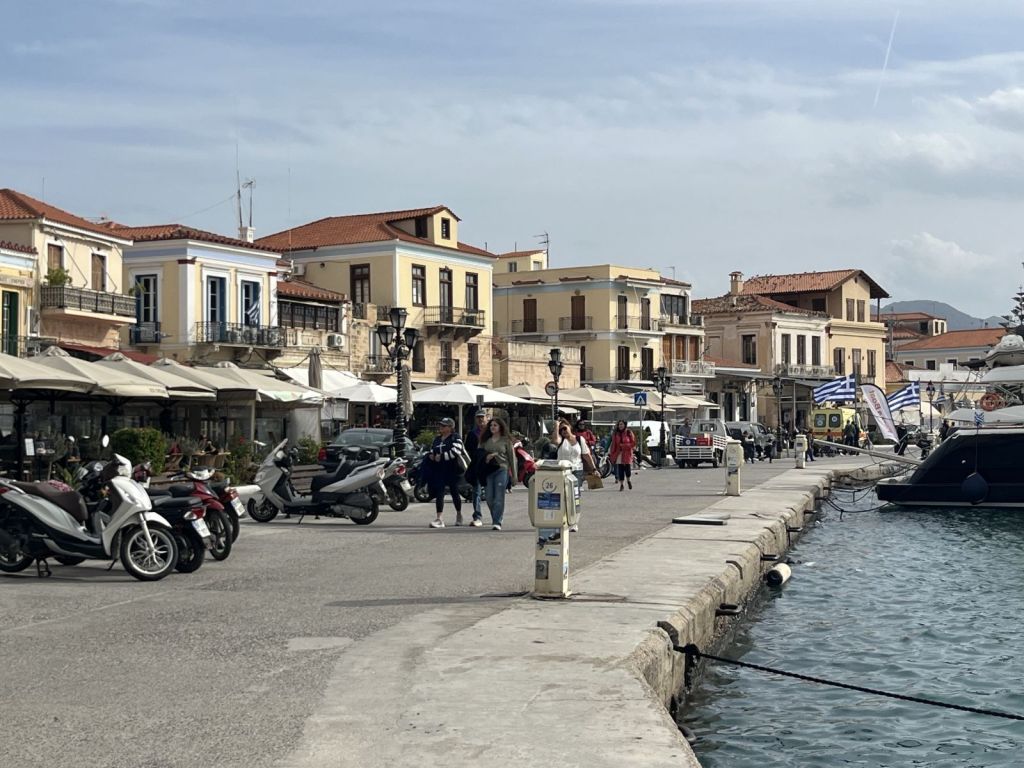
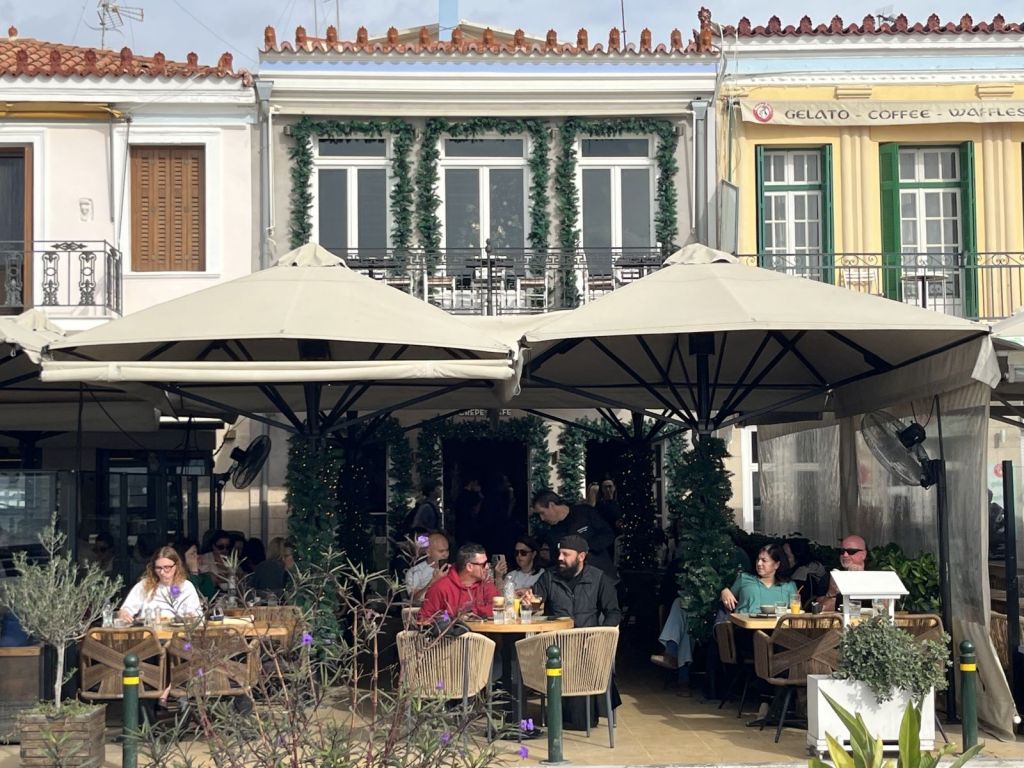
Pastel-coloured neoclassical houses with iron balconies and shuttered windows line the waterfront – some gently crumbling, others repurposed as bars, eateries or commercial buildings.
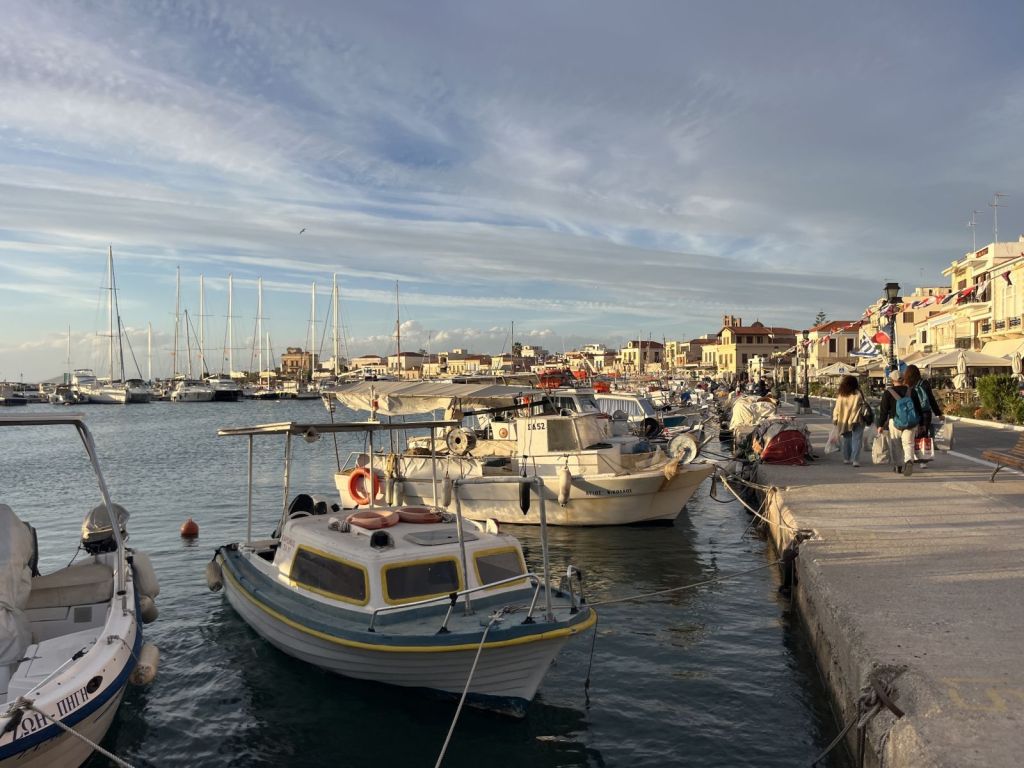
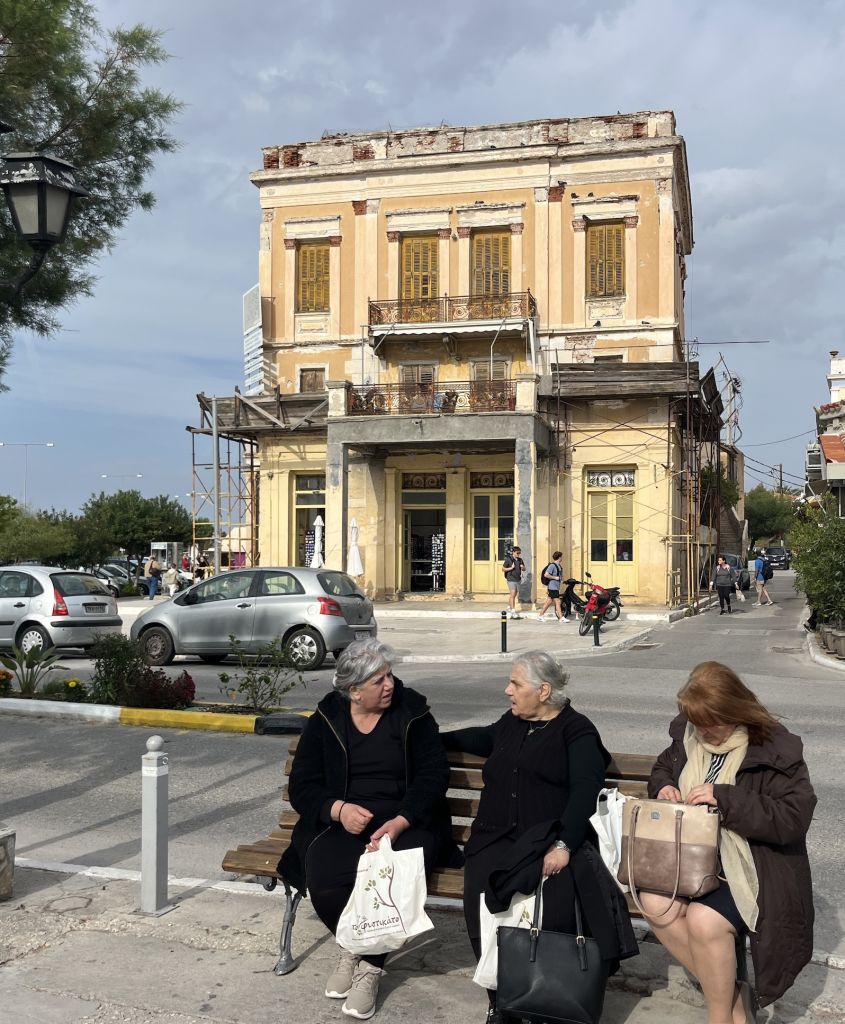
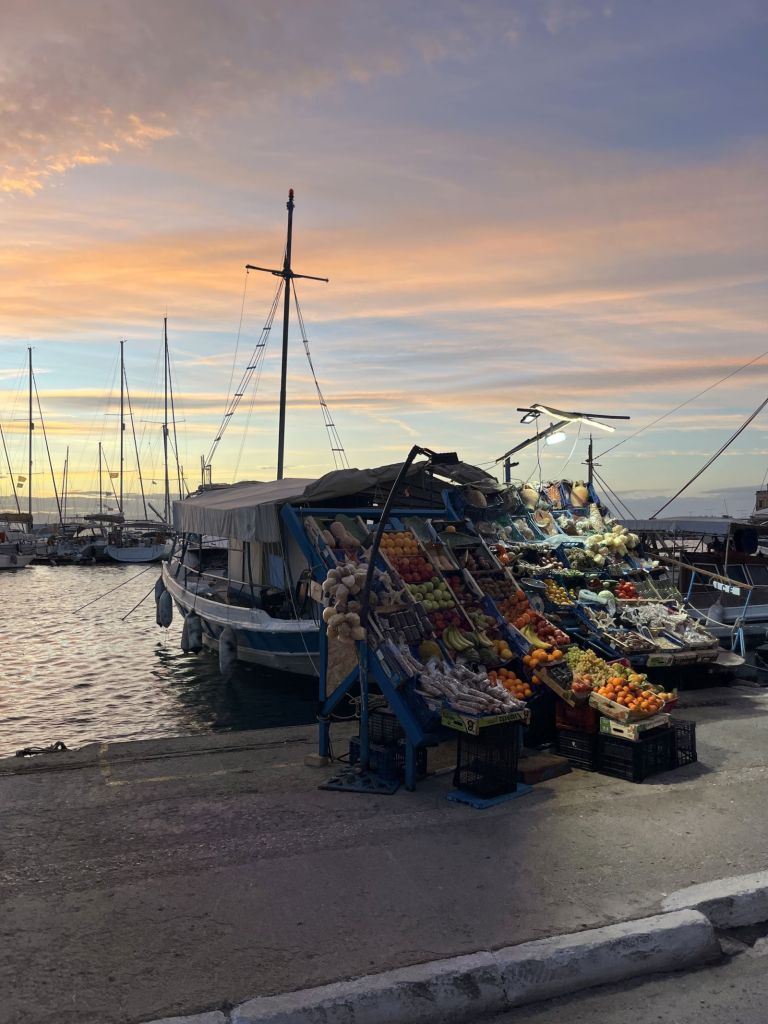
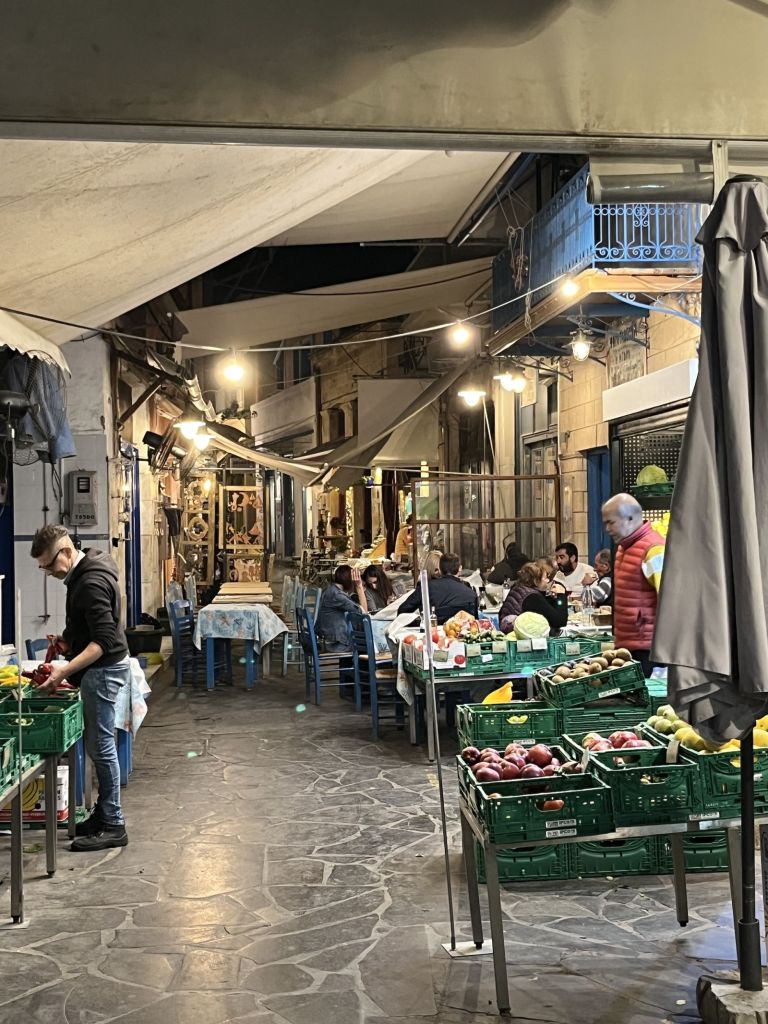
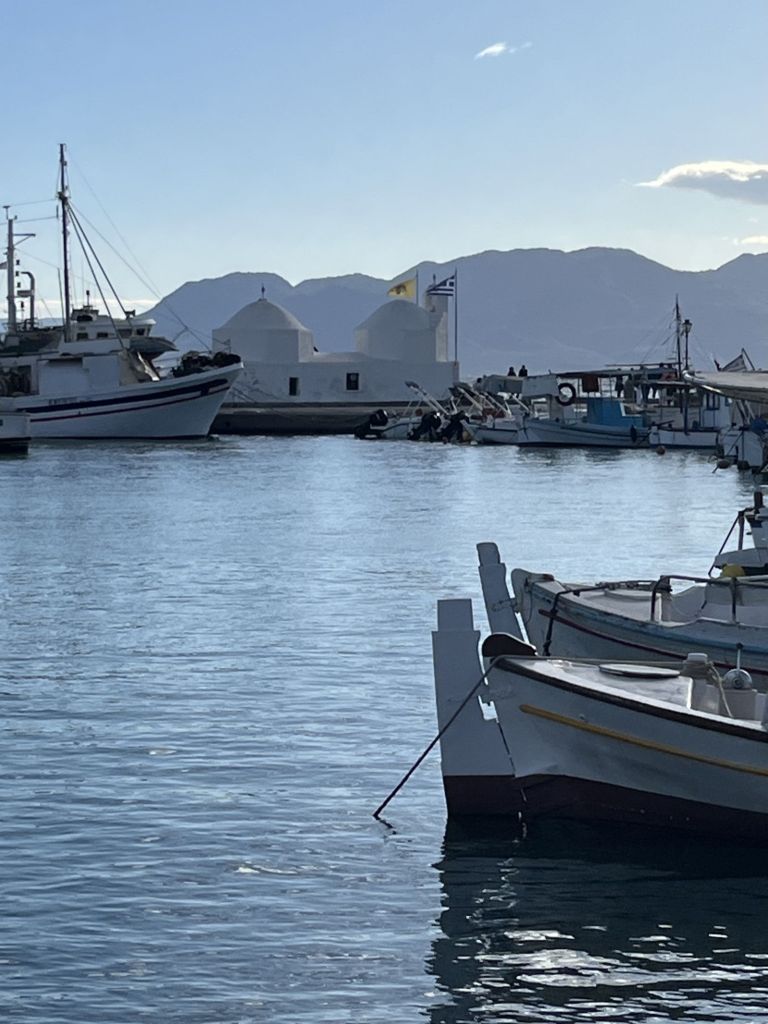
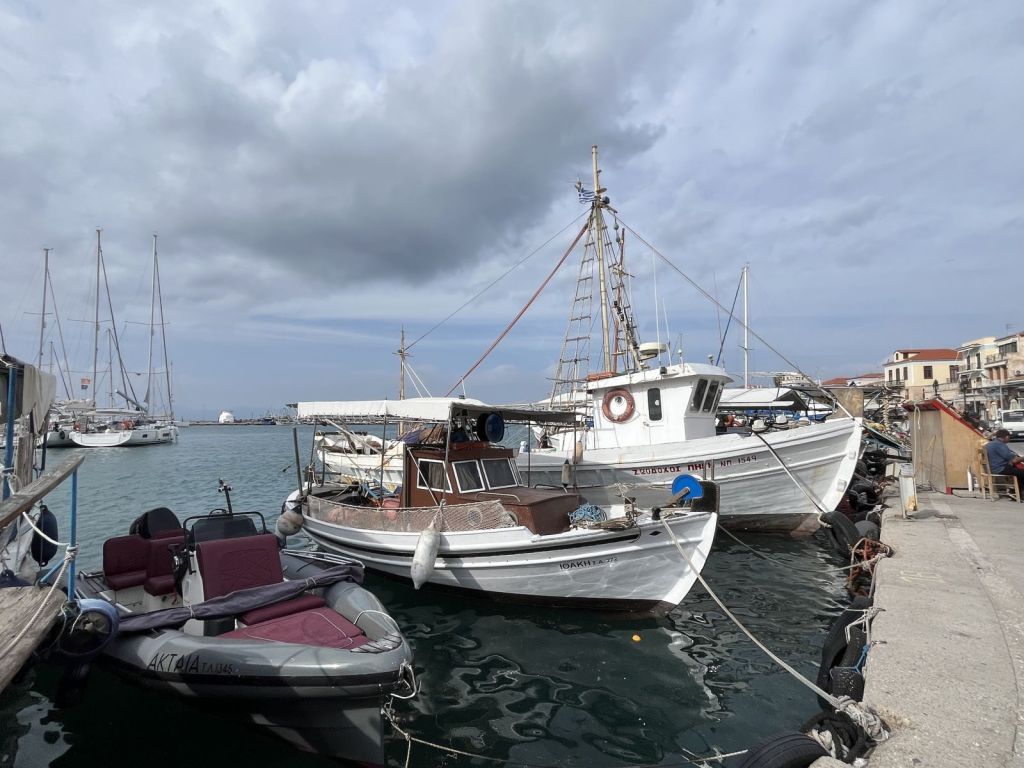
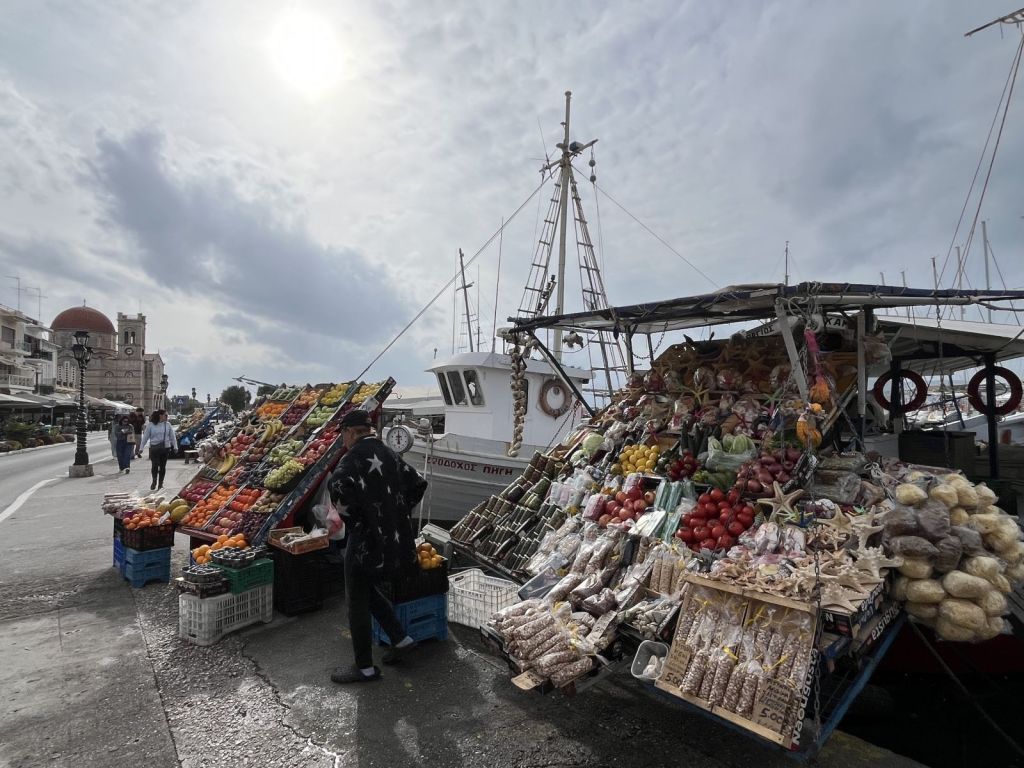
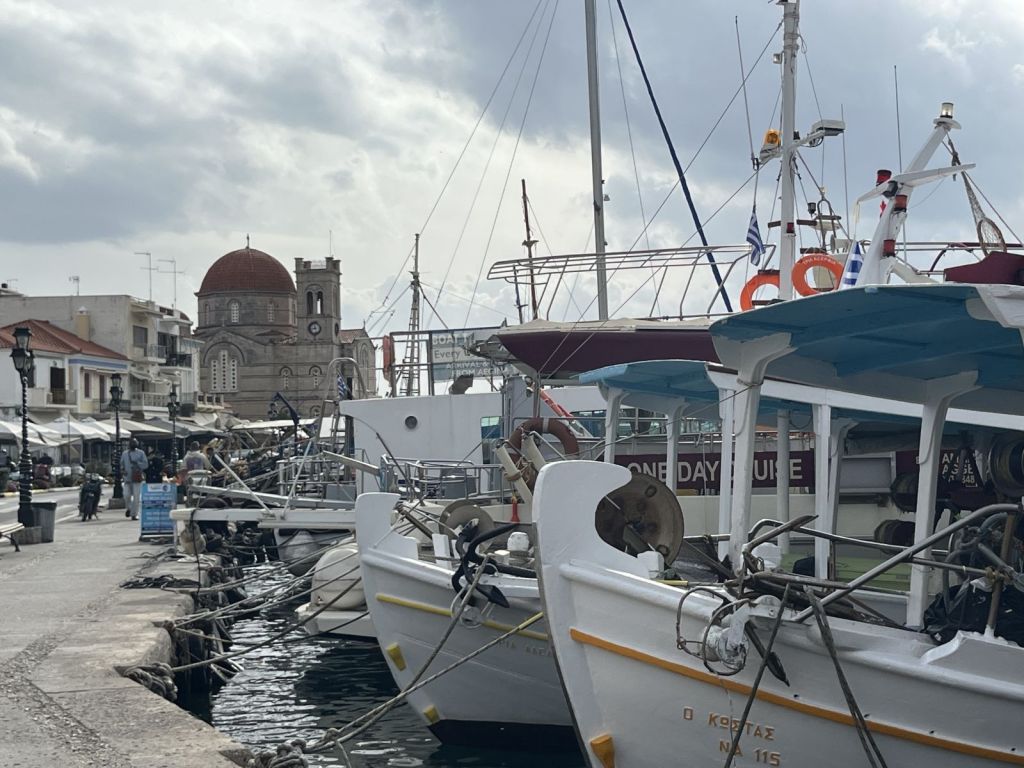
The harbour in Aegina Town is where fishing boats and vegetable caikia clink together gently and excellent bars, tavernas, patisseries, coffee-shops and ice cream parlours stretch from the little park at one end, to the magnificent Church of the Panagitsa at the other.
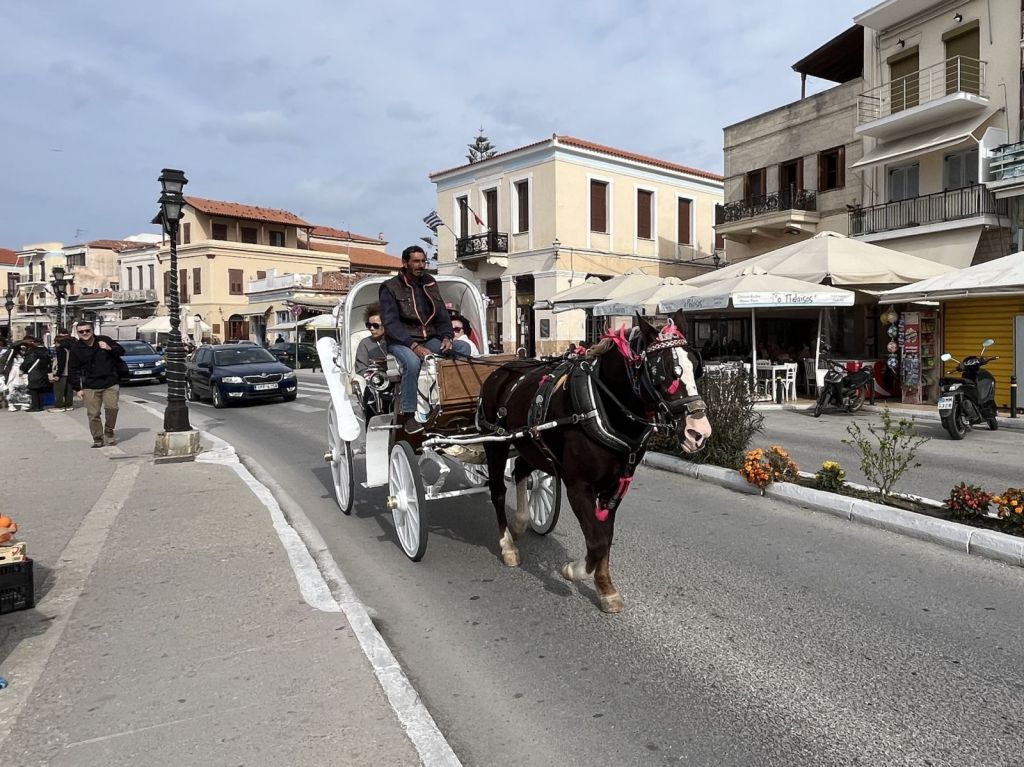
This is a working harbour, not a set piece. You’ll see strolling families, pick-up trucks and horse-drawn carriages all happily co-existing. The narrow streets behind are full of really useful shops, and not a cheesecloth Greek goddess dress or donkey fridge magnet in sight. Bliss.
Evening at the Lighthouse
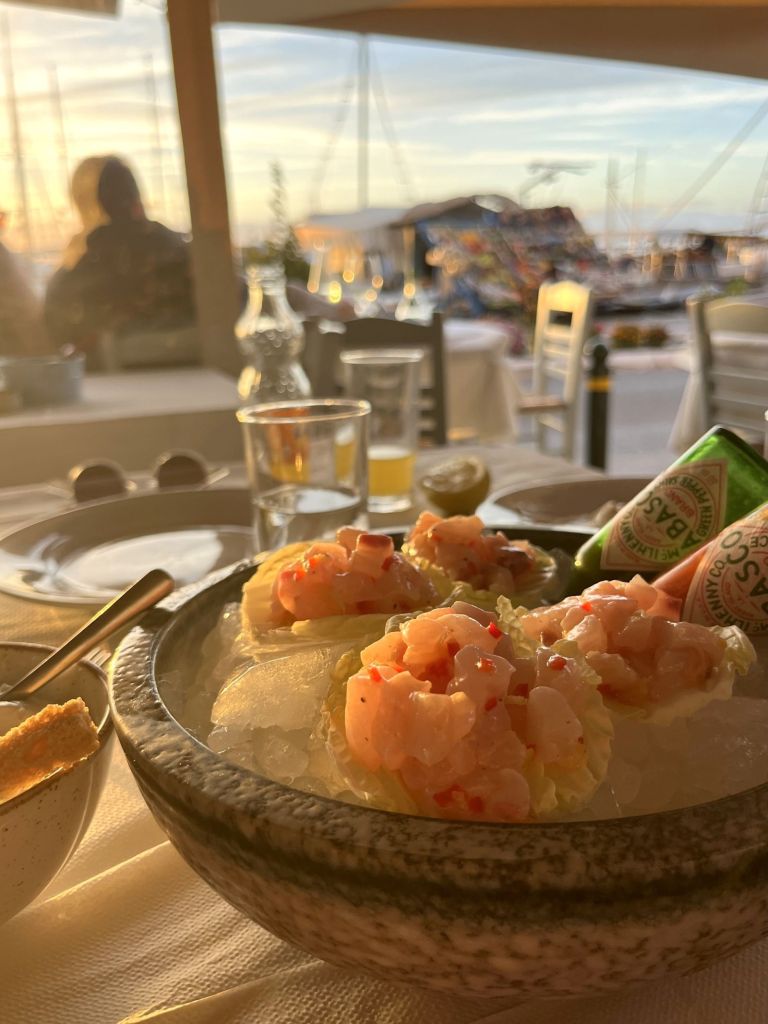
Behind the town’s main streets, you can take in the old customs house, the fish market, and several neoclassical mansions before ending the day at the Bouza Lighthouse. Watch the sea turn violet at sunset, then settle in at Aiakeion for what may well be the best taramosalata and whole grilled shrimp that I have ever tasted.
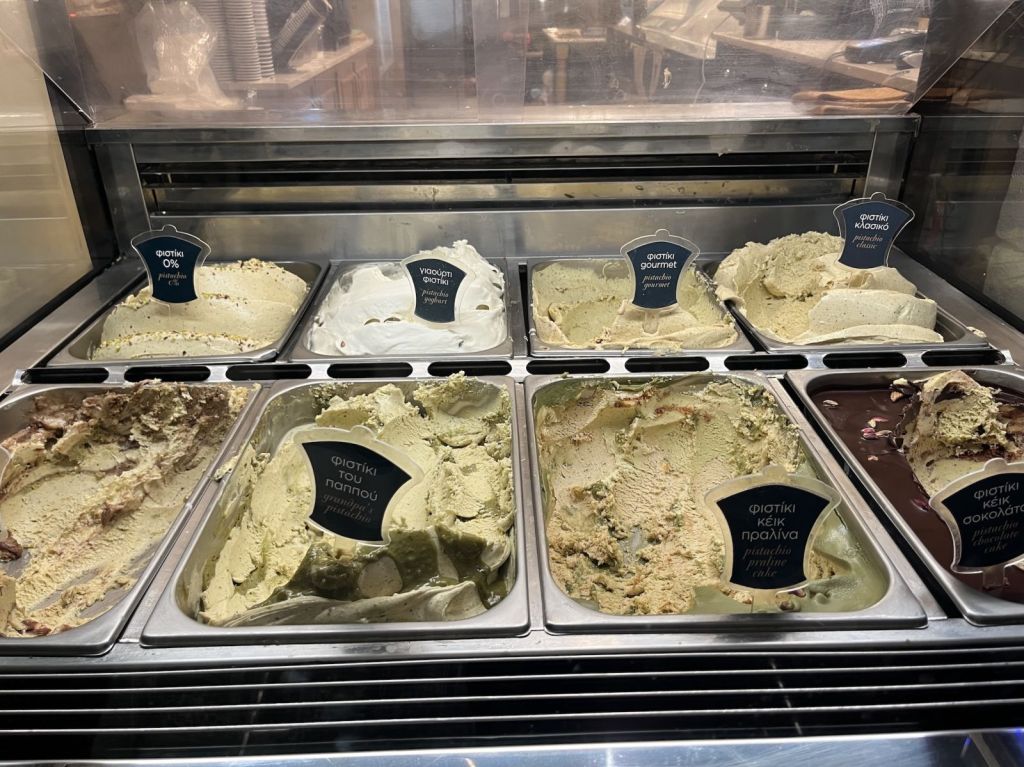
It also has an ice cream parlour with eight different varieties of Pistachio ice cream. After all, you can’t end the day with a shrimp taste in your mouth.
Day 2 – Temple of Aphaia, Forest Walks & Kapralos Museum
Visiting the Temple of Aphaia
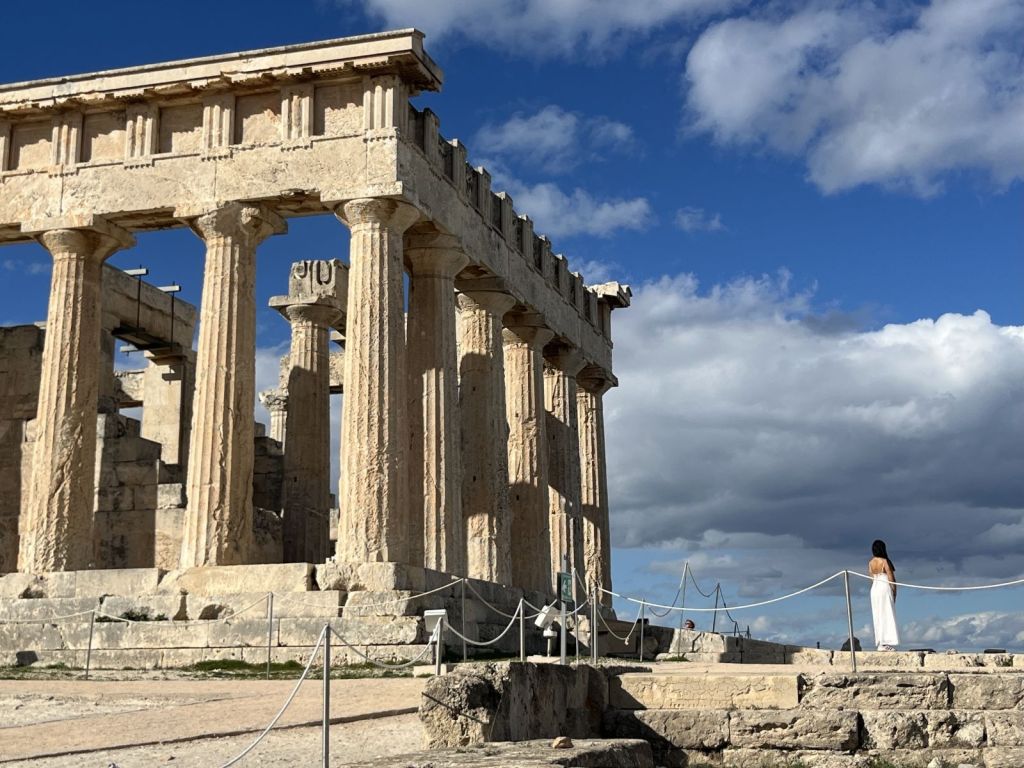
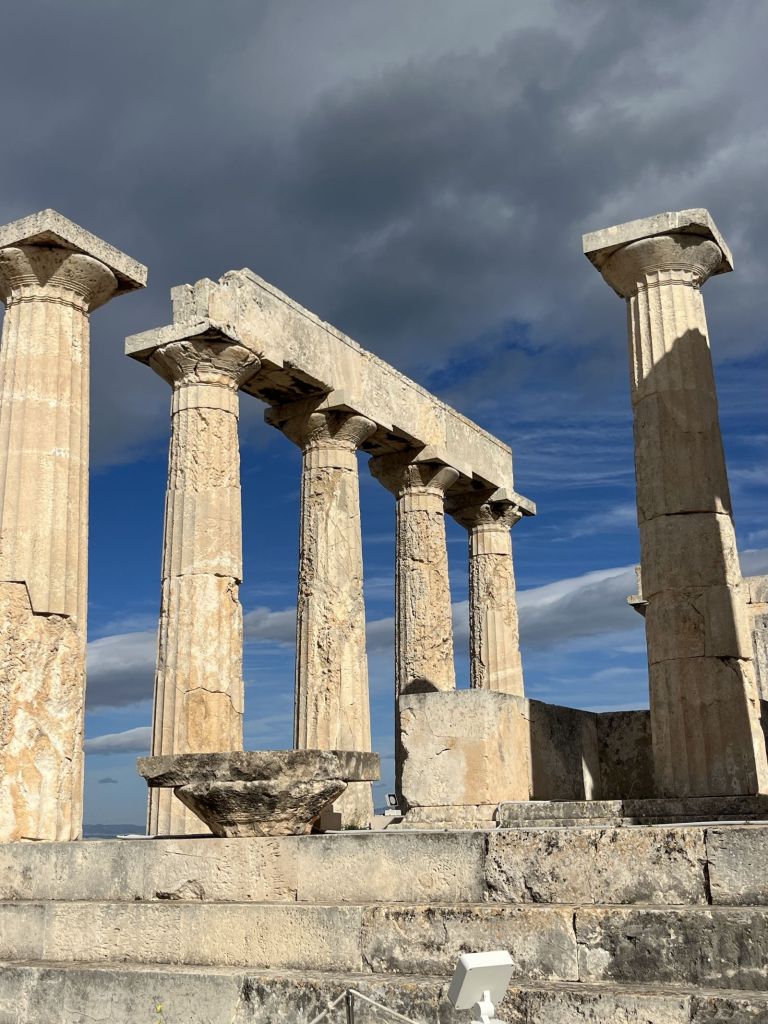
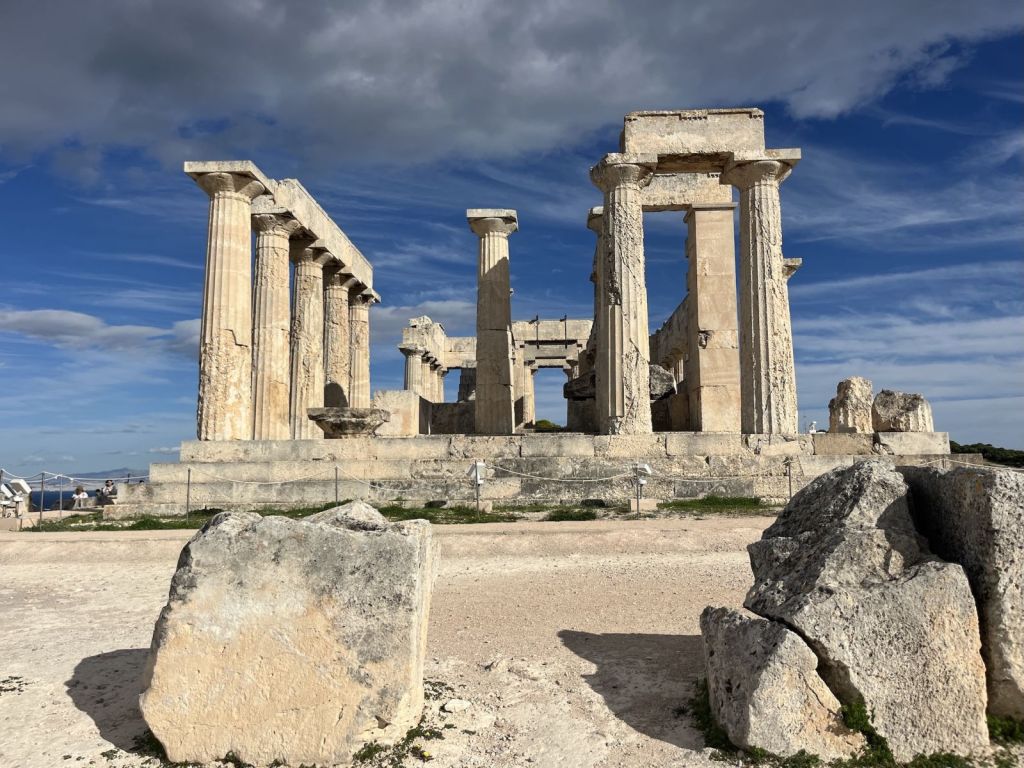
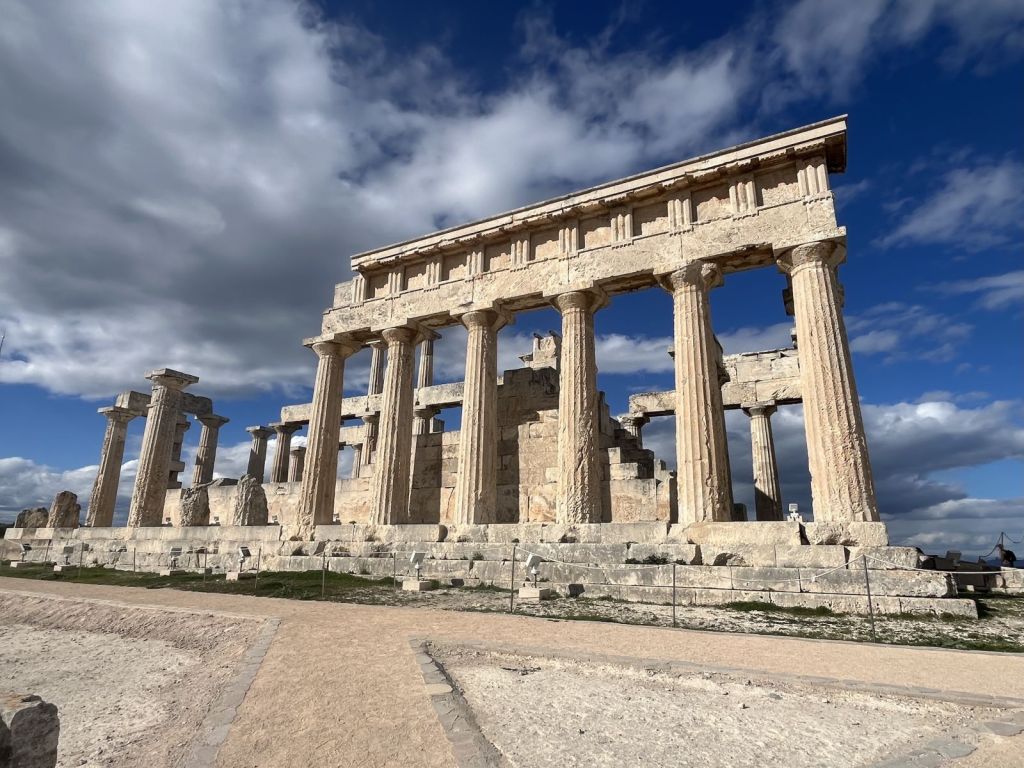
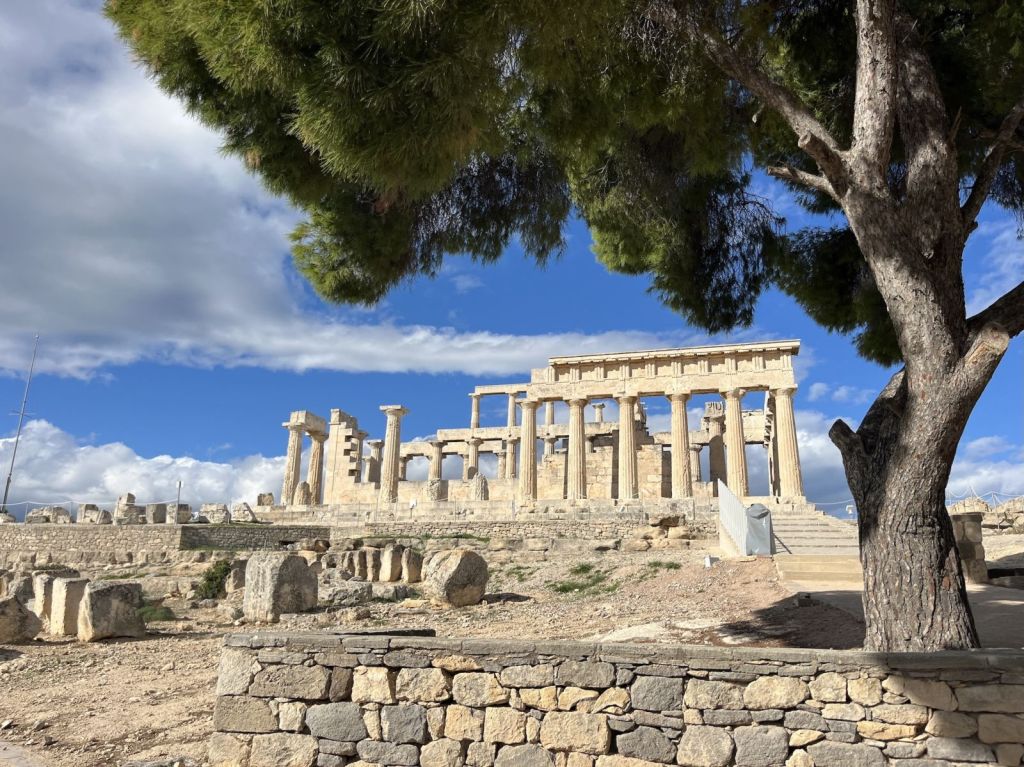
This is the big one. Coaches with guides come for the day, and if you must buy a fridge magnet, this is the place to do it.
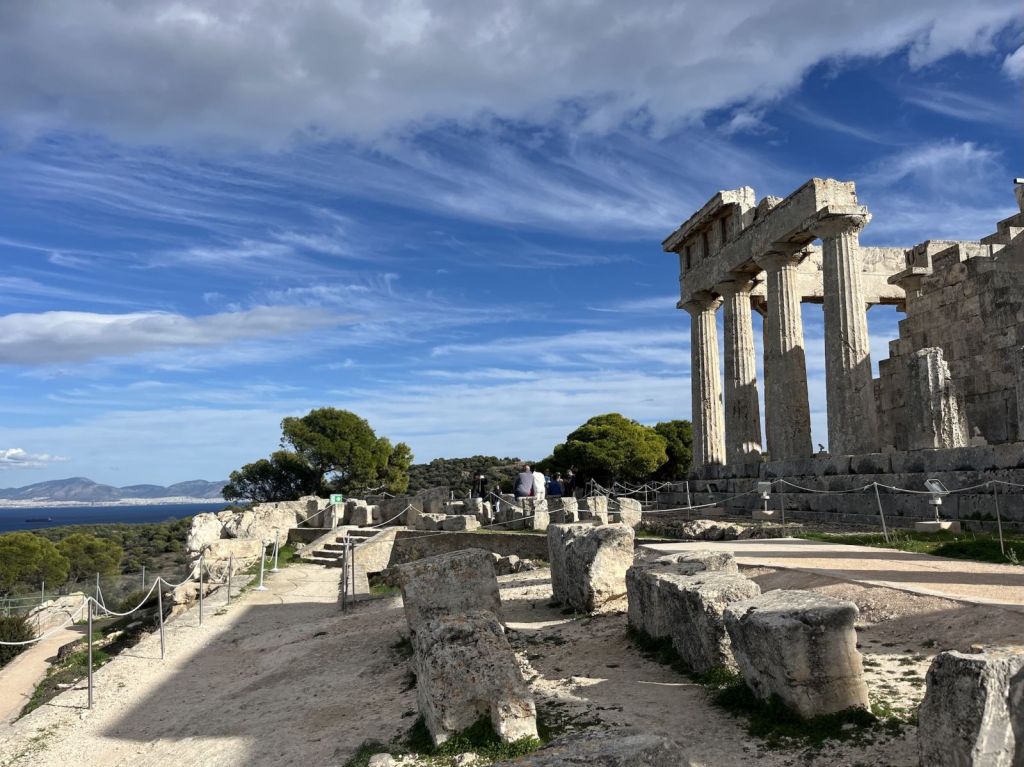
The Temple of Aphaia stands high on a pine-covered hill above Agia Marina. Built around 500 BC, it is one of the best-preserved Doric temples in Greece. The approach path winds through a fragrant forest before the pale limestone columns emerge above the trees.
The temple has six columns on each end and twelve along each side, many still standing with visible tool markings. Its pediments once depicted scenes from the Trojan War. The older, western pediment showed more rigid, archaic warriors, while the later eastern pediment displayed more natural, dynamic figures that marked the transition into the early classical style.
Today, the originals are kept in Munich, but detailed replicas and fragments in the museum help recreate the full sculptural program. These scenes connected the local goddess Aphaia with the wider heroic myths of Greece.
Aphaia herself is thought to have been a local deity associated with nature, fertility, and the protection of sailors, whose cult long preceded the classical temple.
Views Across the Saronic Gulf
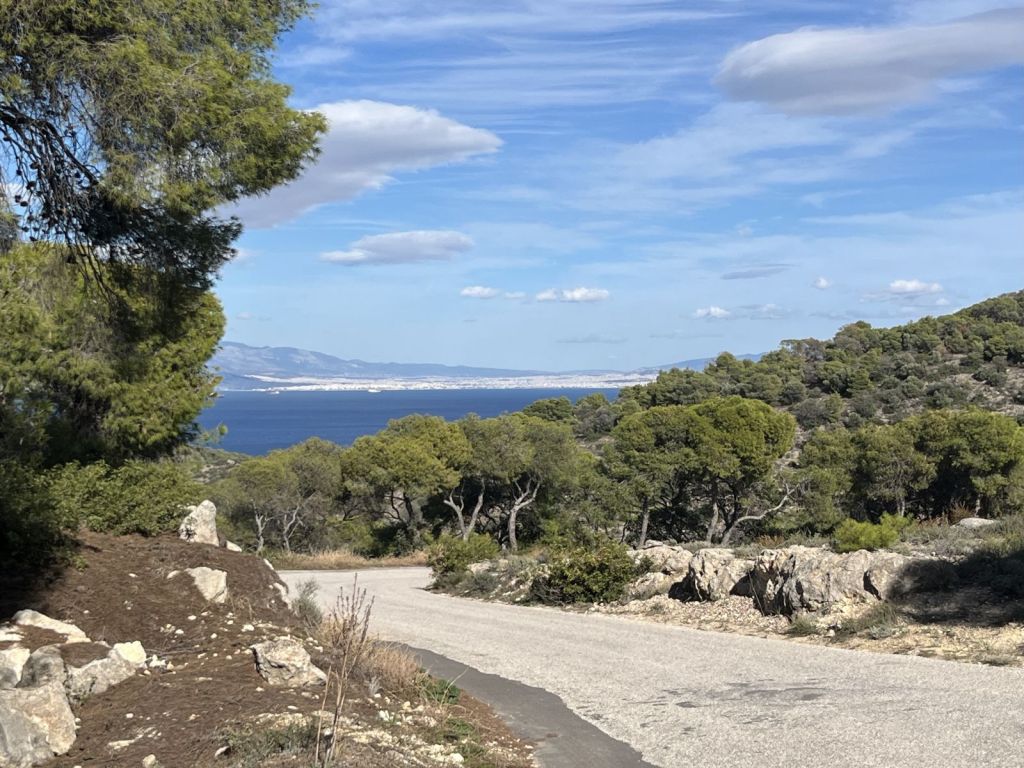
From the temple platform, you can gaze over the Saronic Gulf, taking in the smaller islands, the Peloponnese coast, the Attica coast, and the glittering new skyline of Athens Hellenikon – which is backed by the snow-capped mountains of Parnassos on a clear winter day.
Forest Trails & Café Stop
Surrounding the sanctuary are the remains of the large altar platform where sacrifices once took place. There’s also a stone-lined cistern which was used for ritual purification, foundations of priests’ quarters and storerooms, and parts of the perimeter wall that once enclosed the sacred area. Broken blocks and carved stones lie half-buried in the earth with wild flowers peeping out from between.
The Temple café has old stone seats and tables and one of the best views over the hillside dropping down to the sea, shaded under more of Aegina’s fabulous pine trees. Energetic walkers can continue along the Aphaia ridge trail – often entirely alone.
Christos Kapralos Museum
A nice addition to this day is a visit to a pottery workshop in Mesagros. After that, you can end the day at the Christos Kapralos Museum – a sea-facing art studio filled with expressive wooden, bronze and stone sculptures that feel deeply rooted in the Greek landscape.
Day 3 – Perdika, Moni Island & Coastal Walking
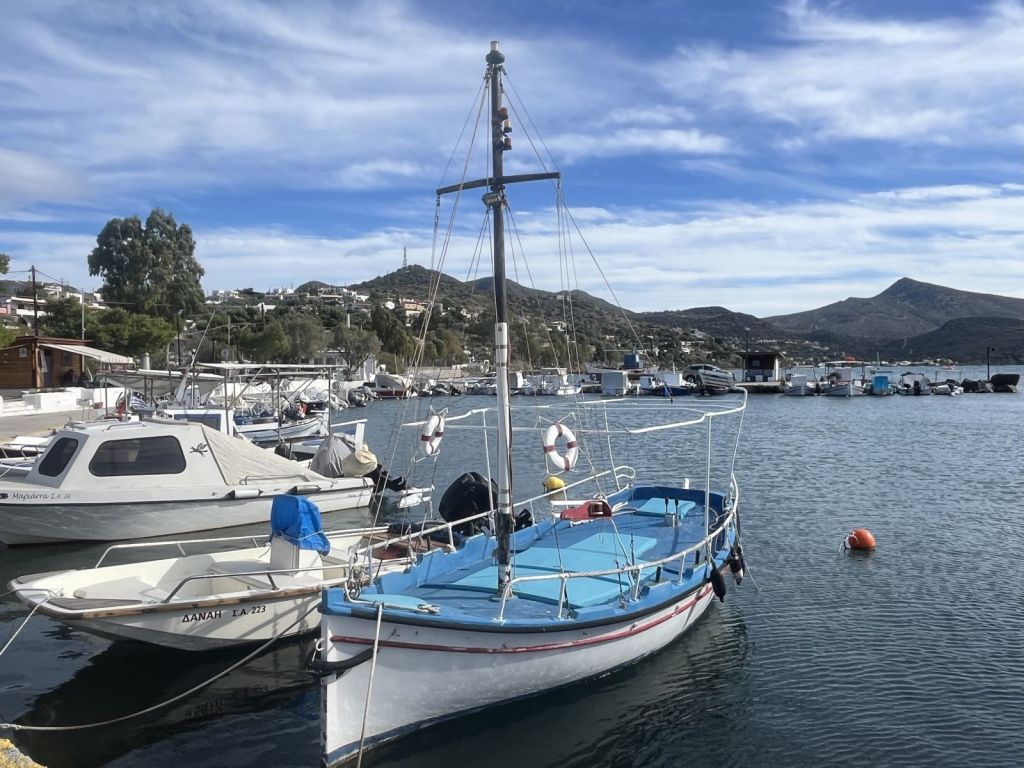
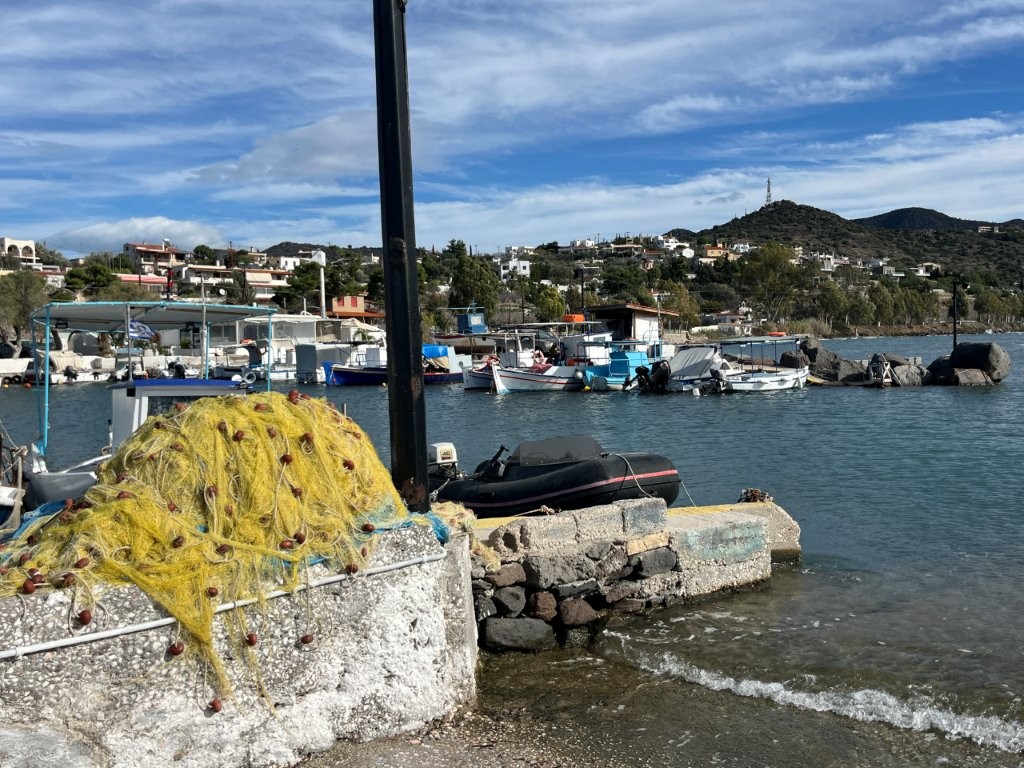
Spend the morning in Perdika, a small fishing village of narrow lanes and quiet cafés. From the harbour, we can arrange a boat to Moni Island – a protected nature reserve known for turquoise water, pine forests, tame deer, and peacocks.
This is a real highlight, as the island is well known for its beautiful water. On cooler days in spring or autumn, you can hike the path to the island’s highest viewpoint, swim in rocky coves, and enjoy the peaceful beaches before returning to Perdika.
In the late afternoon, walk back along the coastal path toward Aeginitissa, passing stone terraces, small chapels, fishing docks, and quiet rocky inlets. Seafood here is excellent and unppolished – exactly as it should be.
Day 4 – Kolona Archaeological Site & Aegina’s Early History
Kolona & the Archaeological Museum
The Kolona site, named after the single standing column of the Temple of Apollo, includes prehistoric houses, fortifications, storerooms, and ancient city remains.
Next door, the Archaeological Museum of Aegina (founded in 1829) holds an exceptional collection for its size.
You can expect to see:
- Mycenaean pottery, including stirrup jars and vases with spiral and marine motifs, illustrating Aegina’s role in the Bronze Age trade networks.
- Terracotta figurines and votive offerings from sanctuaries across the island, portraying animals, worshippers, and deities.
- Detailed replicas and fragments of the sculptures from the pediments of the Temple of Aphaia, showing how these pieces were once placed.
- A display of early Aegina coins; Aegina was one of the first places in Europe to mint silver coinage. The famous “turtle coins,” with a sea turtle stamped on one side, are highly covetable as well as speaking to the island’s early importance as a maritime centre.
- Stone tools, small idols and household objects from prehistoric settlements offer a glimpse into life on Aegina long before the classical period.
Outside in the museum’s courtyard, beneath the open sky, lie scattered column drums, capitals, sarcophagus fragments, and blocks from various monuments.
Neoclassical Aegina Town
When returning to Aegina Town, it’s worth visiting the pink Tower of Markellos. This was the former Government House of Ioannis Kapodistrias, one of Greece’s earliest prime ministers in the 19th century after liberation from the Ottoman Empire, and the neoclassical Orphanage.
In town, pop into the Vriniotis Art Gallery and pass by the Old Girls’ School – a preserved 19th-century educational building. Walking through the town’s back streets is a great way to see the famous Aegina neoclassical homes with carved stone door frames, iron balconies and colourful shutters, many with gardens full of flowers and citrus trees.
The combination of ancient monuments in such close proximity to neoclassical warehouses, churches with tiled roofs and small bell towers, and houses with balconies overflowing with flowers gives Aegina town a unique character of continuous history and ongoing vitality.
Day 5 – Agios Nektarios, Paleochora & the Ancient Olive Grove
The Monastery of Agios Nektarios
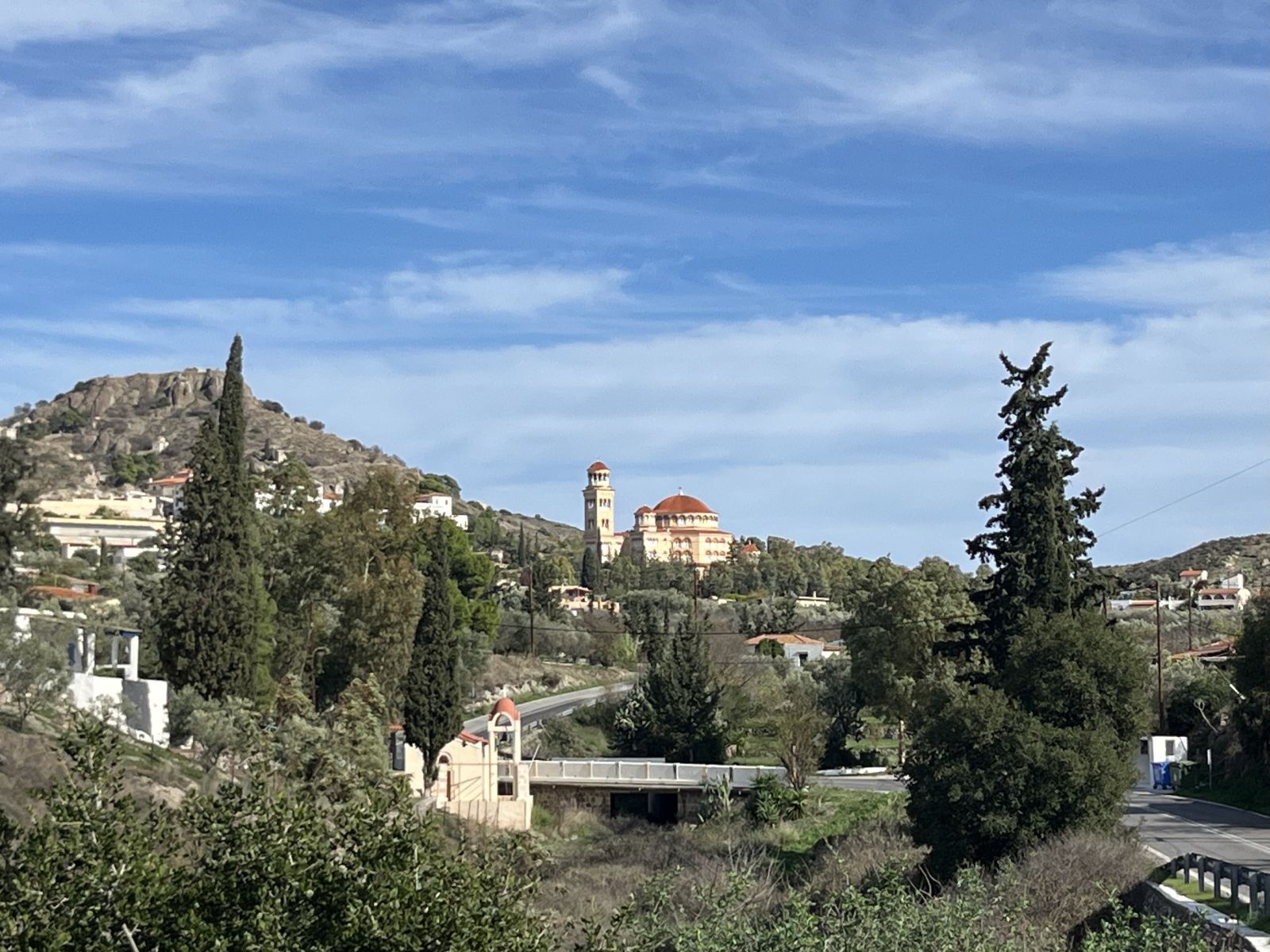
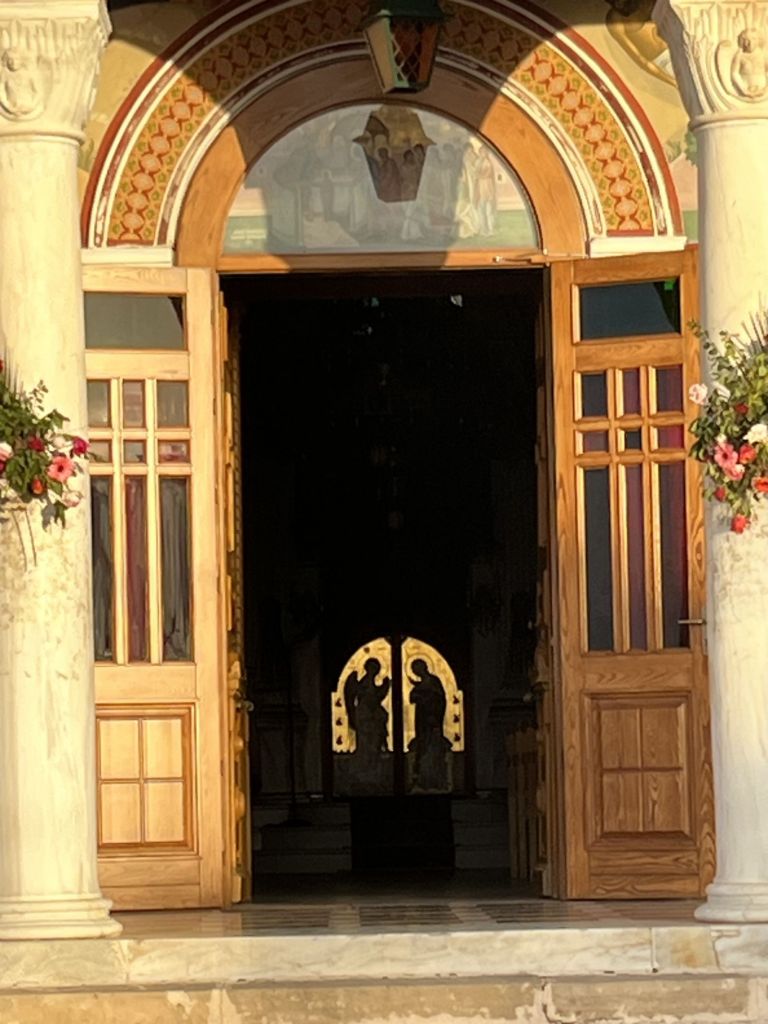
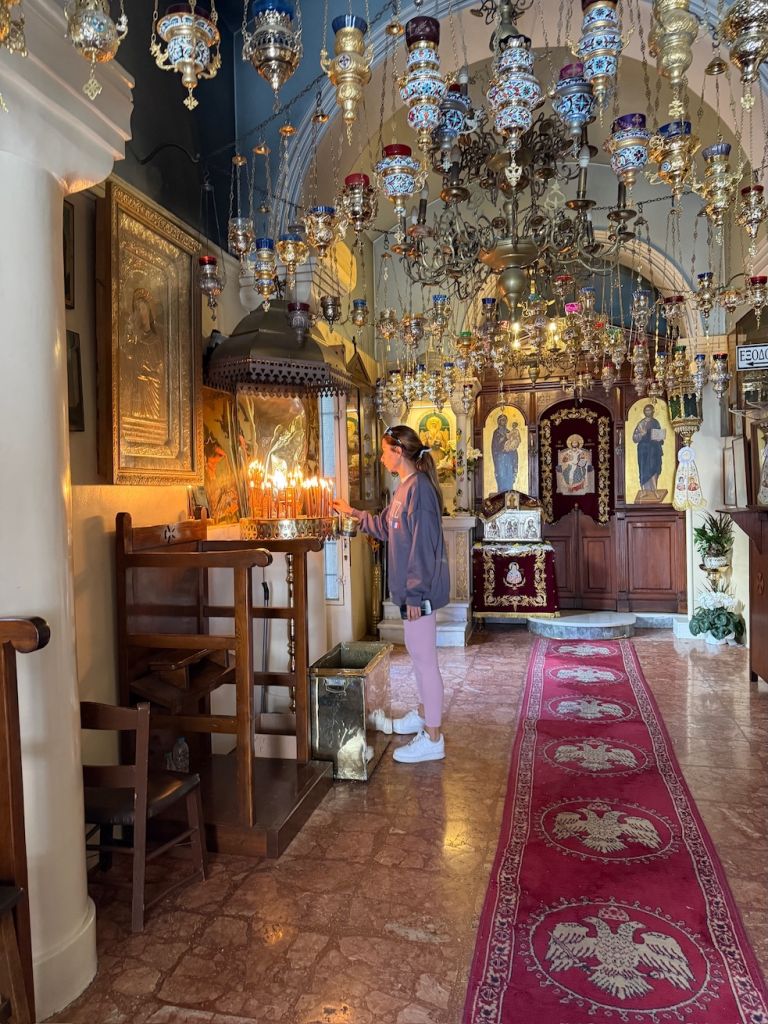
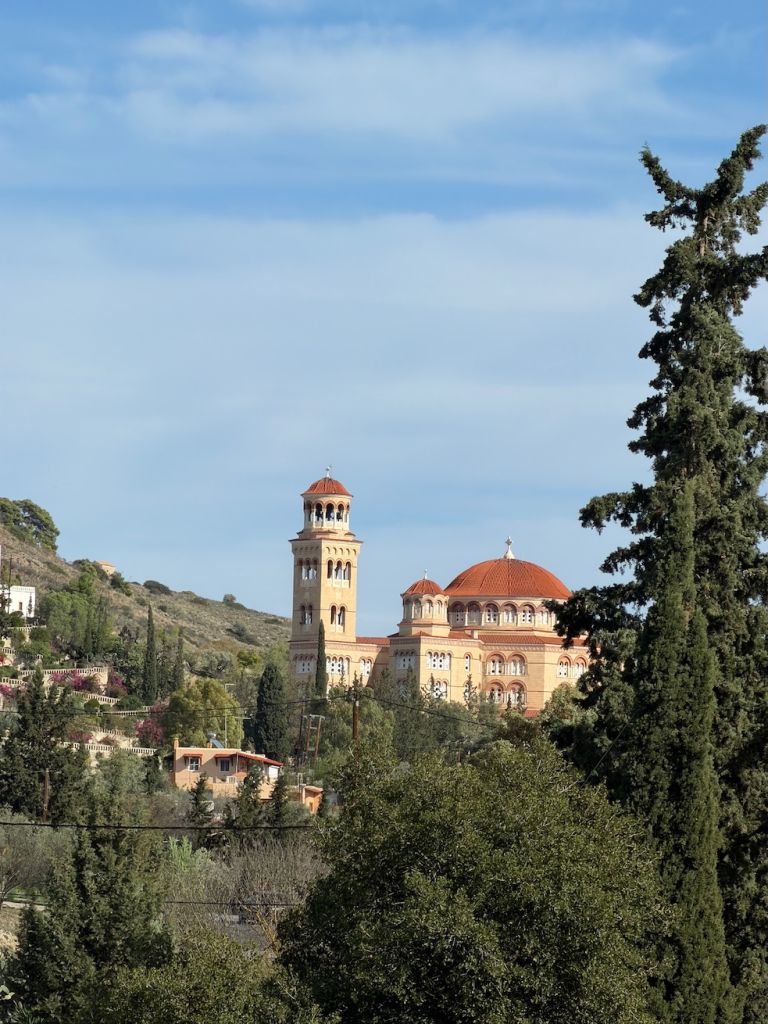
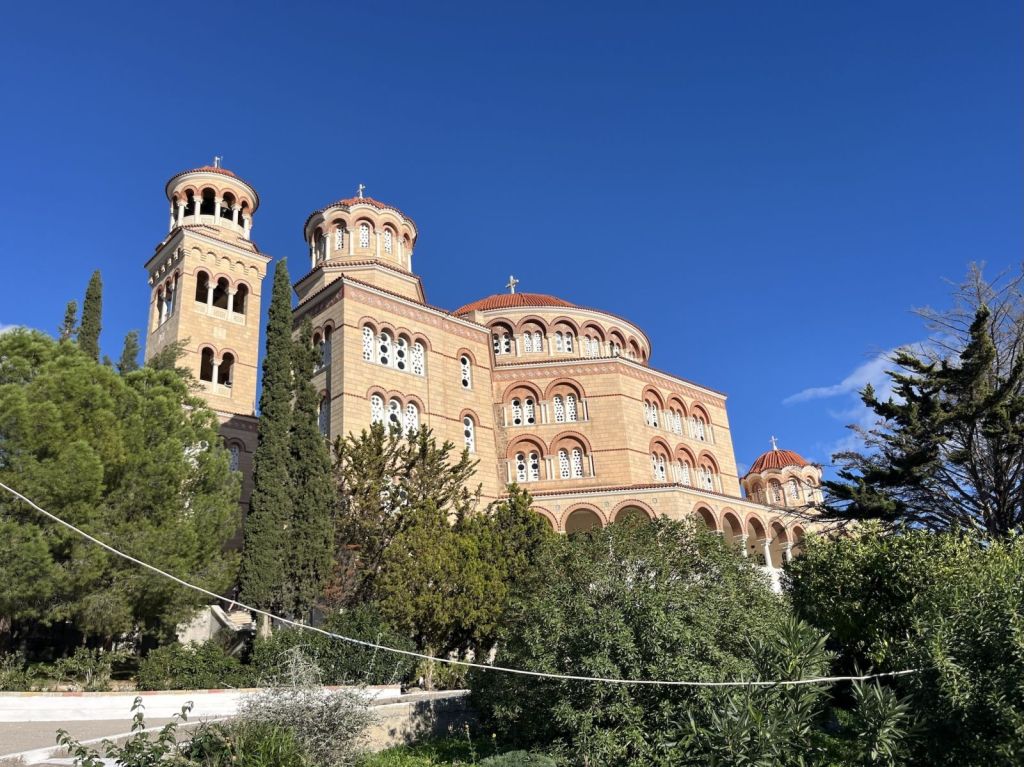
Dedicate this day to the island’s spiritual and rural heartlands. The Monastery of Agios Nektarios, one of the largest monasteries in Greece, is a major pilgrimage site and a popular Sunday church-excursion destination for pious families – and some rather less pious children who inevitably end up playing football in the courtyards.
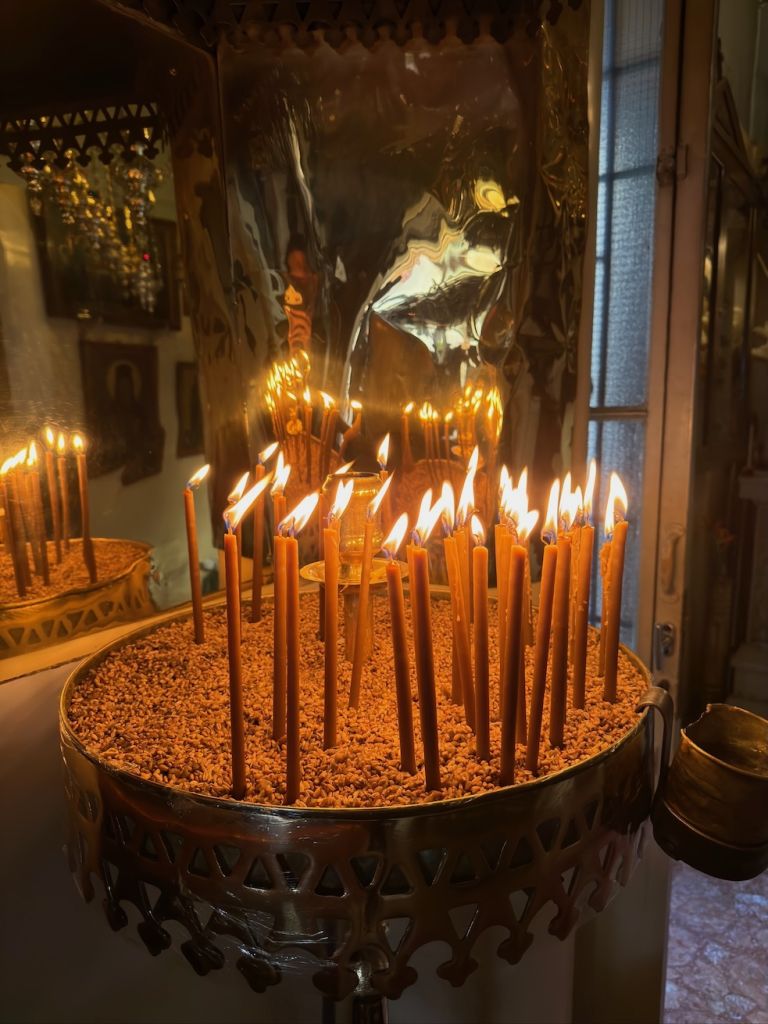
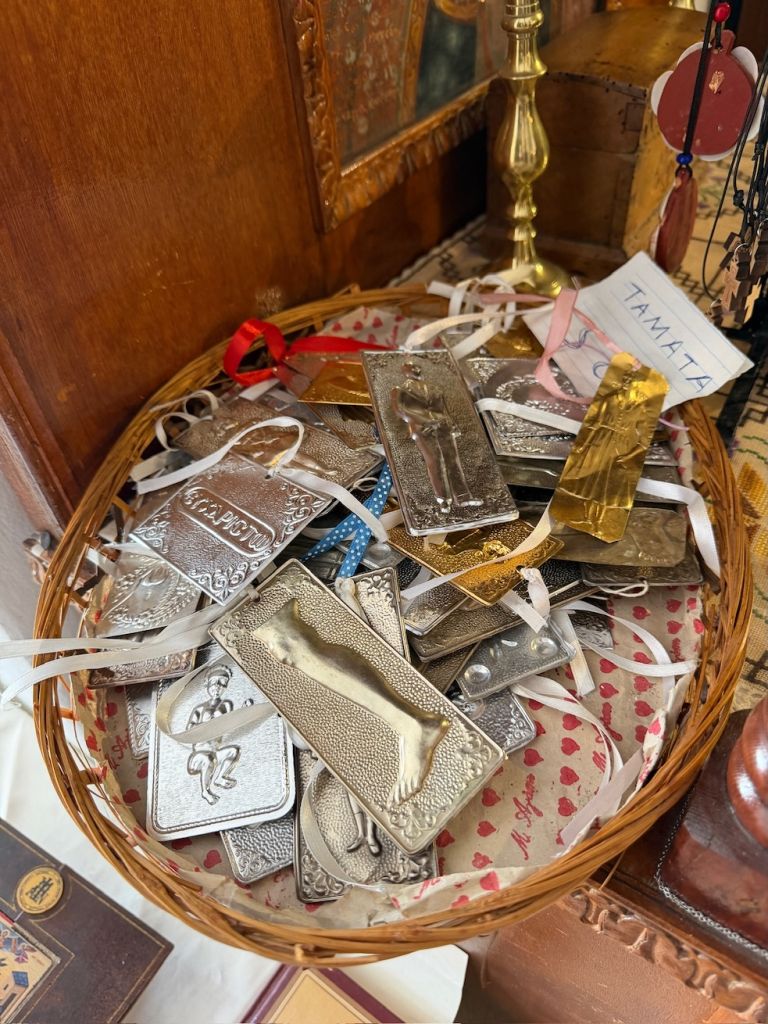
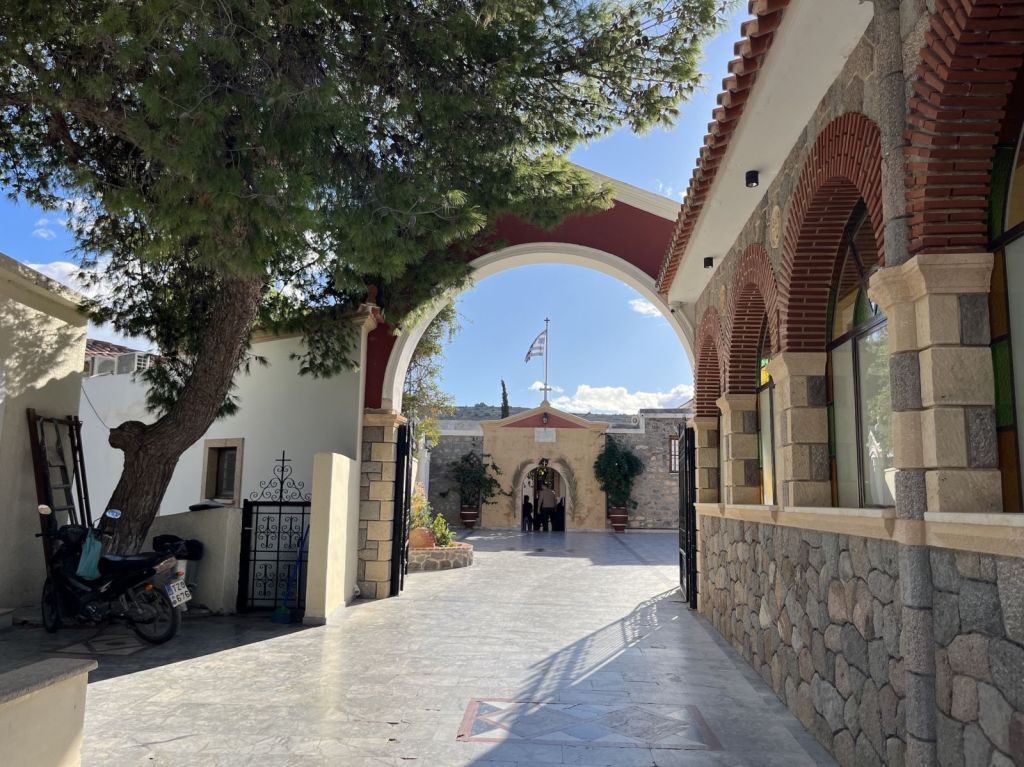
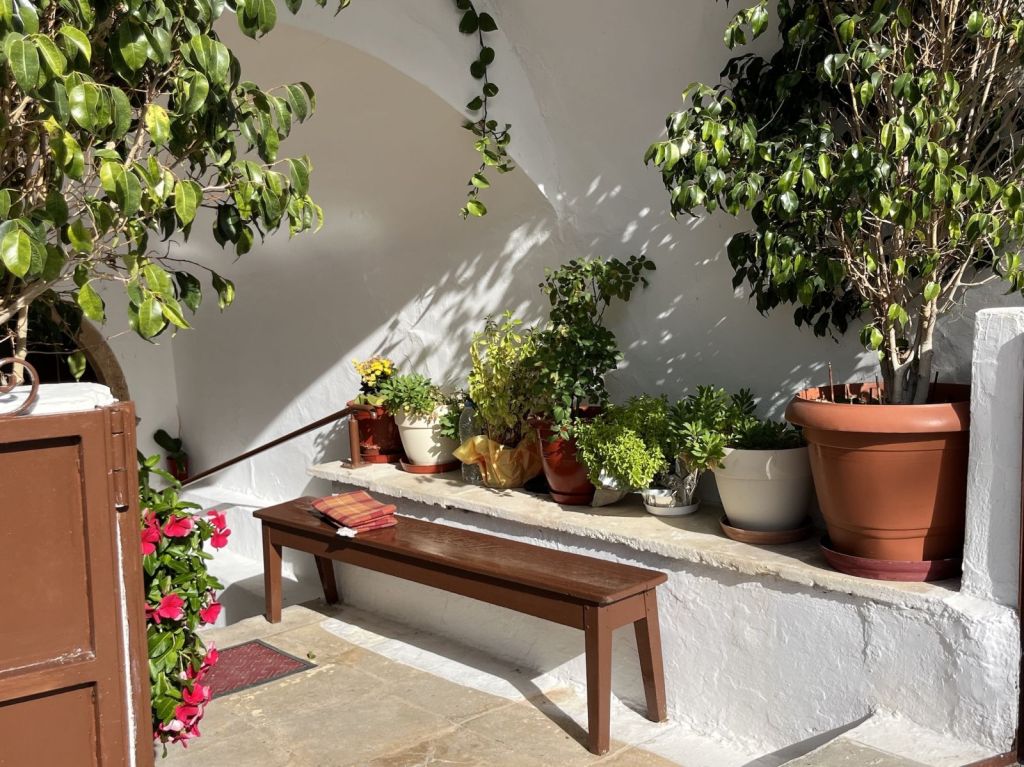
It is a vast and steep complex, with impressive domes, wide staircases and arched colonnades that create a sense of grandeur. At the same time, the inner courtyards, filled with flowers and quiet corners, retain a feeling of peace. Inside the main church, pilgrims light candles and pray before icons and relics of Saint Nektarios.
Exploring Paleochora – Aegina’s Medieval “Ghost Town”
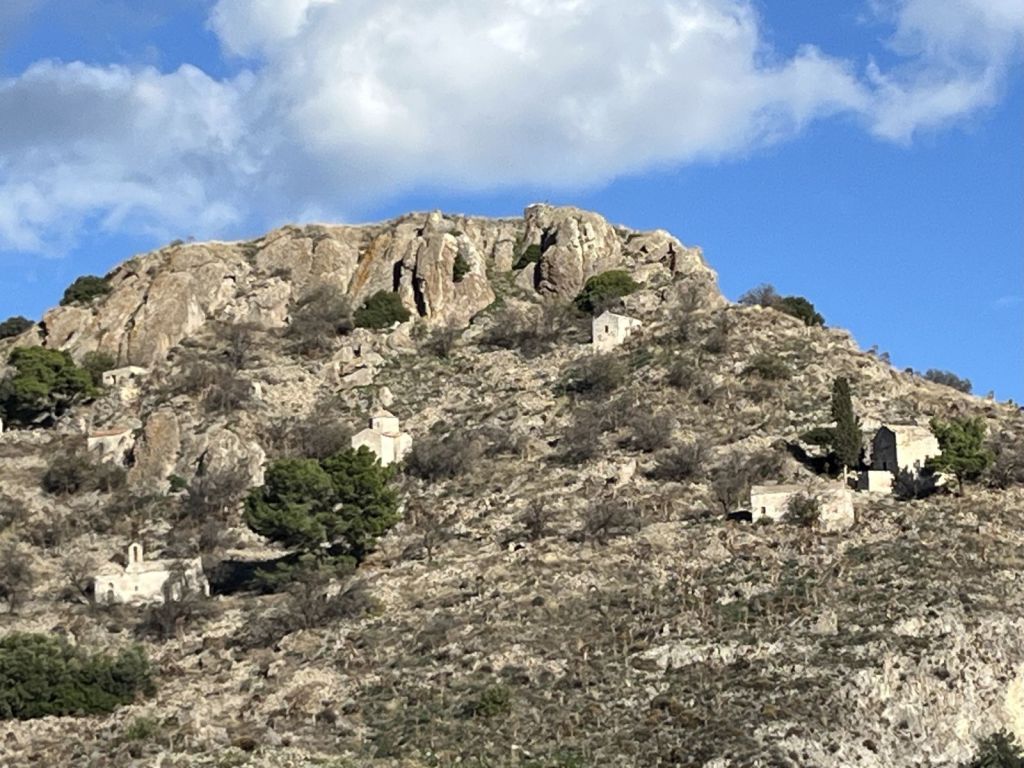
From the monastery, a road and footpath lead uphill to Paleochora, Aegina’s medieval hilltop settlement. Built inland to protect residents from pirate raids, Paleochora once contained dozens of houses and more than 30 churches scattered across the slopes.
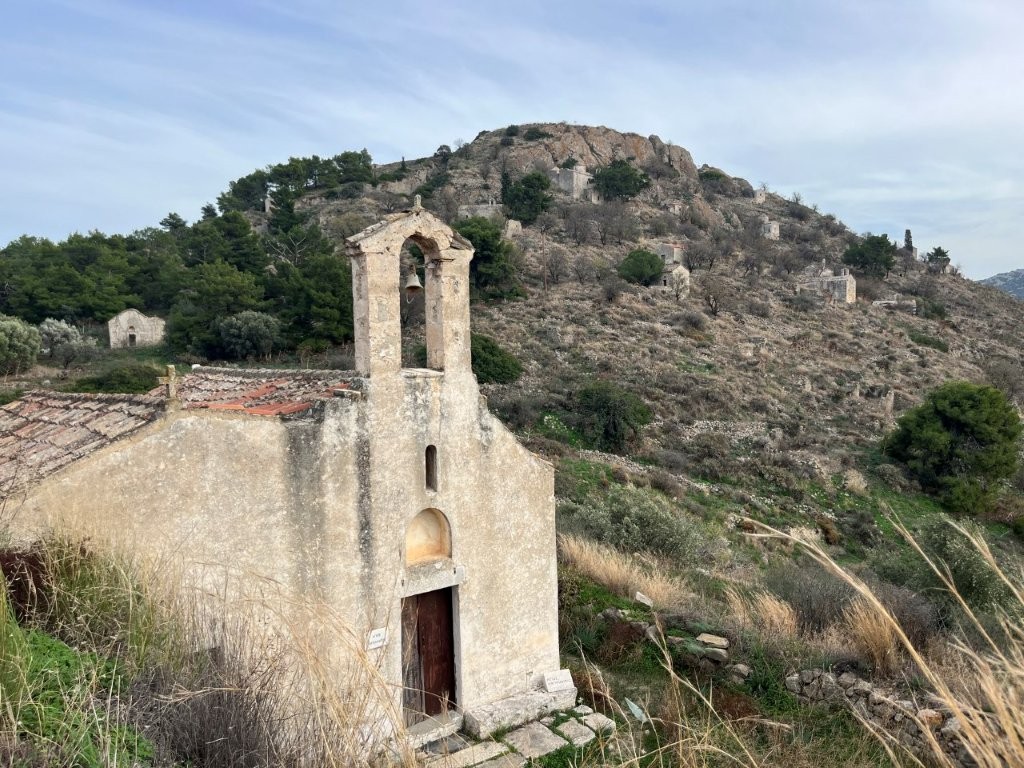
Today, many of these churches still stand. Some retain fragments of frescoes, others are partially collapsed, and a few remain beautifully intact.
Chapels, Frescoes & Forgotten Paths
You can happily spend several hours wandering Paleochora’s network of paths. Small churches dedicated to different saints appear unexpectedly among ruins and scrub. One of the most beautiful is the Chapel of the Theotokos, with its solid stone walls, arched doorway and faded interior paintings that still hint at their former richness.
The Ancient Olive Grove of Eleonas
To complement the rural vibes, look for the ancient olive grove of Eleonas. Here, centuries-old olive trees grow, their thick trunks twisted into intricate shapes by time and weather. The ground is dotted with wildflowers and low stone walls. The combination of age, resilience and quiet beauty makes this one of the most atmospheric places on Aegina.
Day 6 – Eastern Coast: Souvala, Loutra & Agia Marina
Souvala & the Quiet Northern Coast
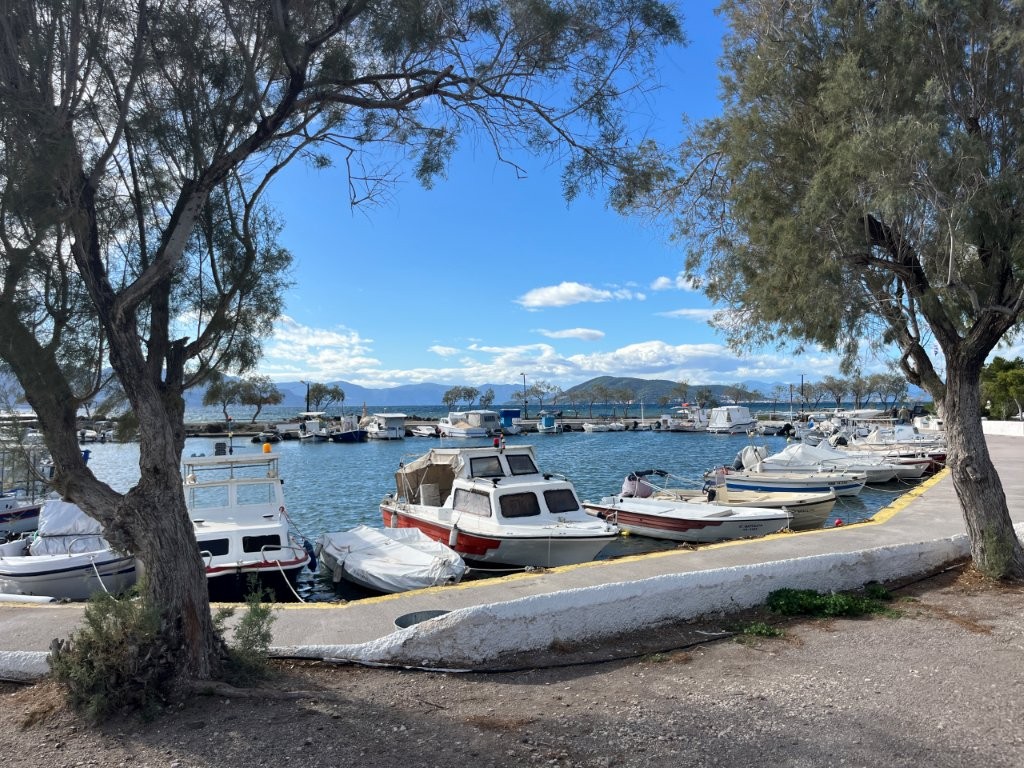
This day is dedicated to the eastern and northeastern coastline. Begin in Souvala, strolling along the waterfront where tavernas and cafés face a small harbour that still feels local and unhurried.
From there, continue to Loutra, the area of the thermal springs that once drew visitors for their therapeutic waters. While the bathing facilities are now largely quiet, the surrounding coastline remains beautiful, with rocky edges and clear water.
Agia Marina & Folk Traditions
Agia Marina is one of Aegina’s most popular beach resorts. You can visit the small local Folk Art Museum, which displays traditional clothing, household objects and photographs documenting earlier island life. Afterwards, reward yourself with a swim at the long sandy beach, where shallow and clear waters lap the shore.
Coastal Walks & Viewpoints
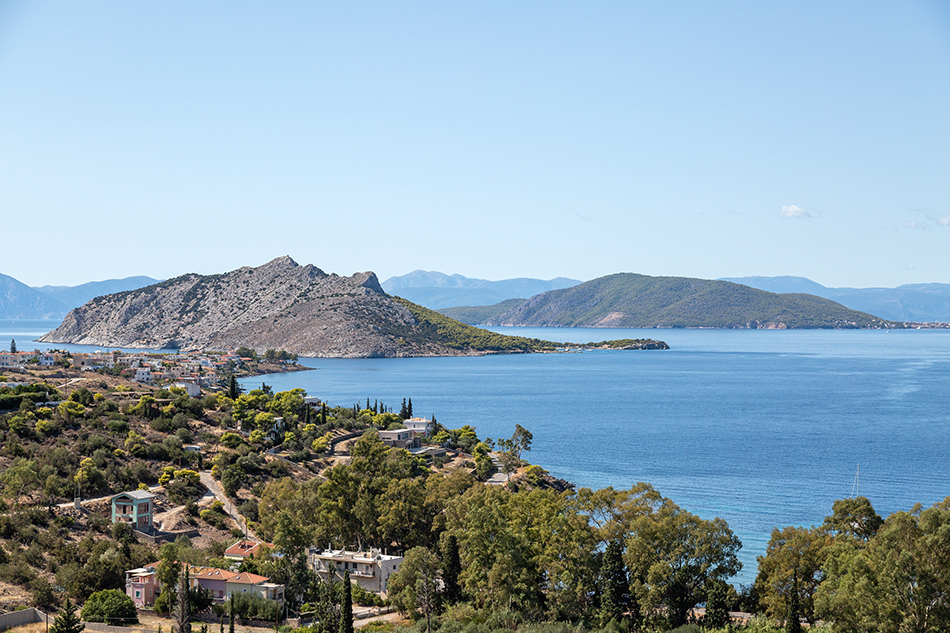
A trail begins in the pine forest behind the village and leads to Metamorfosi Church, a small chapel perched on a hillside with views across Agia Marina and the sea. Returning along the eastern road, stop at Saint Vlasis Chapel, set directly beside the water, and at the Sarantakos viewpoint, where pine-covered slopes frame long stretches of coastline. Along this route, several small coves along this route tempt with their clear, quiet waters.
Day 7 – Crafts, Workshops & Maritime Heritage
Aegina’s Artistic Community
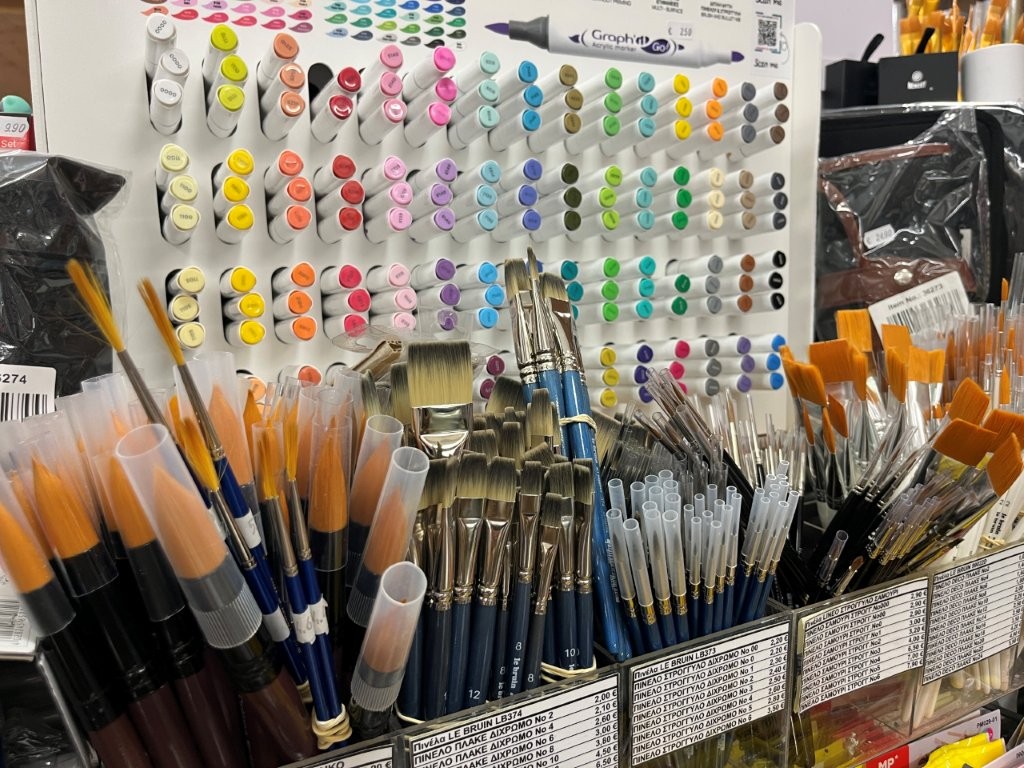
Aegina has a thriving community of artists, designers and photographers who have moved here for the quality of life, the easy access to Athens and the island’s authenticity. Hence the excellent art supply shops…
Workshops & Traditional Crafts
In and around Aegina Town, Mesagros and Kipseli host a series of workshops and pottery studios. You can watch potters throw clay on wheels and see icon painters work patiently through various stages of completion – from gessoed wooden panels to the final solemn image.
In other workshops you can still see textile weaving on looms, embroidery, and the preparation of local honey and herbal blends. Pistachio-based sweets and spreads also appear everywhere, as Aegina is famous for its Pistachio industry – we’ll come onto this more below…
Maritime Museum & Shipyards
The Maritime Museum shows models of traditional wooden boats, navigational instruments and photographs that document Aegina’s long relationship with the sea. To continue the maritime theme, walk through the shipyard area just outside Aegina Town, where craftsmen continue to repair wooden fishing boats (trehantiria), preserving both the vessels themselves and the skills required to maintain them.
Day 8 – Mount Oros, Vagia & the House of Rodakis
Hiking Mount Oros
From Vagia, a quiet beach village, pack water and a picnic and hike to the summit of Mount Oros – the highest point on Aegina. The trail climbs steadily through pine forest and low shrubs, with occasional views opening over the northern coast.
At the summit stands the small white chapel of Prophet Elias. From here, the panorama extends across the Peloponnese, Salamina, Poros and, on clear days, the outline of Athens on the horizon.
Ellanios Zeus Sanctuary
On the way down, look out for the Ellanios Zeus Sanctuary – one of Aegina’s oldest religious sites on the mountain’s slopes. Scattered stones, low walls, and traces of altars mark a place associated with some of the island’s earliest cult activity.
The House of Rodakis
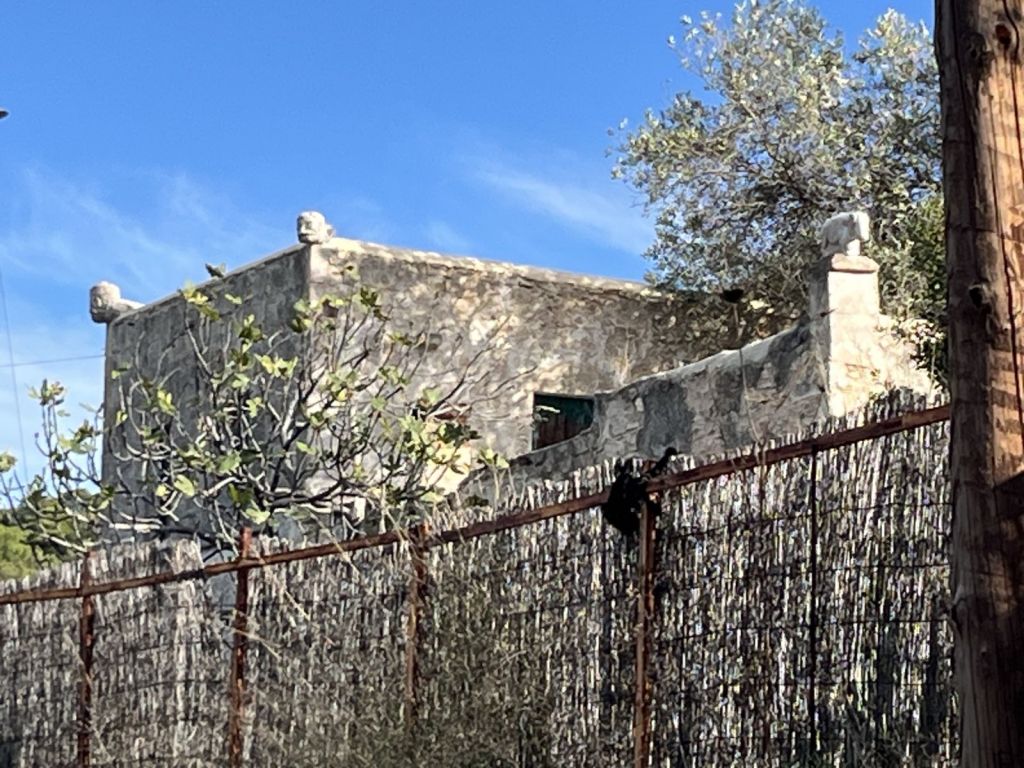
If you go back via Mesagros, visit the House of Rodakis – if you can find it hidden behind prickly pear cactus and if it happens to be open, which is part of Aegina’s charmingly casual attitude to its treasures.
This 19th-century farmhouse is a beautiful example of local folk architecture, built with stone, earth and wood, and decorated with symbolic sculptural motifs such as lions, serpents and eagles. Its elongated courtyard and surrounding rooms reflect the rhythms of rural life.
Day 9 – Churches, Museums & Faneromenis
Churches of Aegina Town
This day is devoted to churches, small museums and quieter corners of Aegina Town and its surroundings. Begin with Saint Dionysios’s Church, with its painted interior and icons, then Saint Spiridon near the harbour, dedicated to sailors and travellers.
The Cathedral of Aegina is closely linked to the early years of the modern Greek state and was the setting for some significant moments in Greek modern history.
The Catacomb Church of Faneromenis
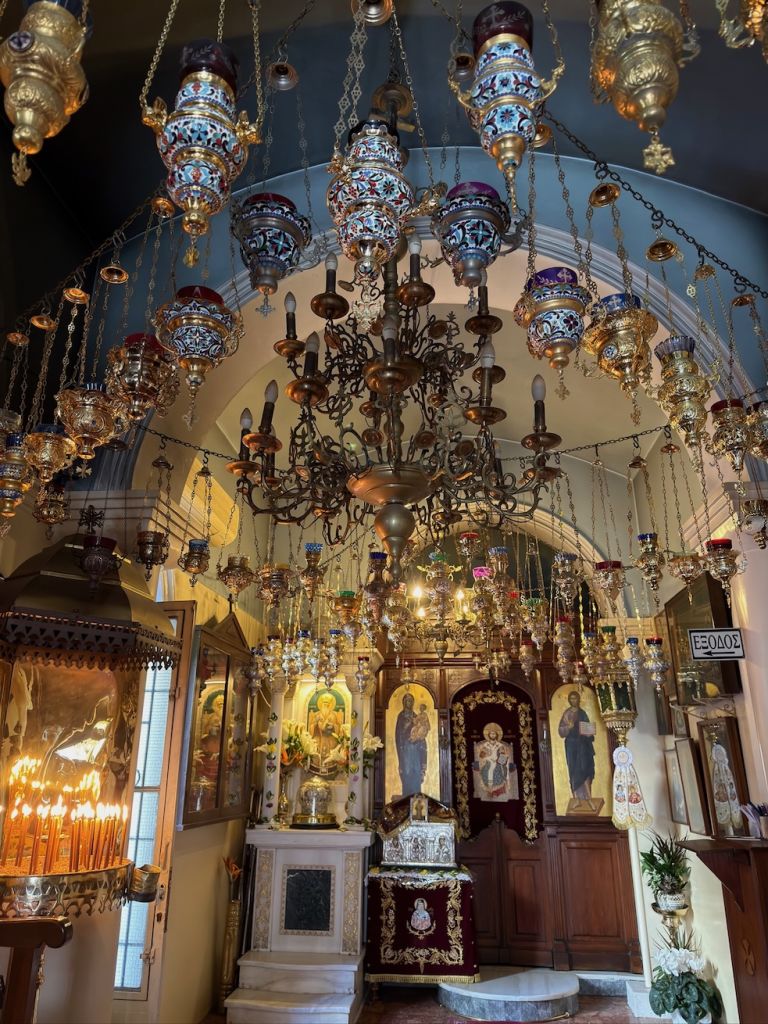
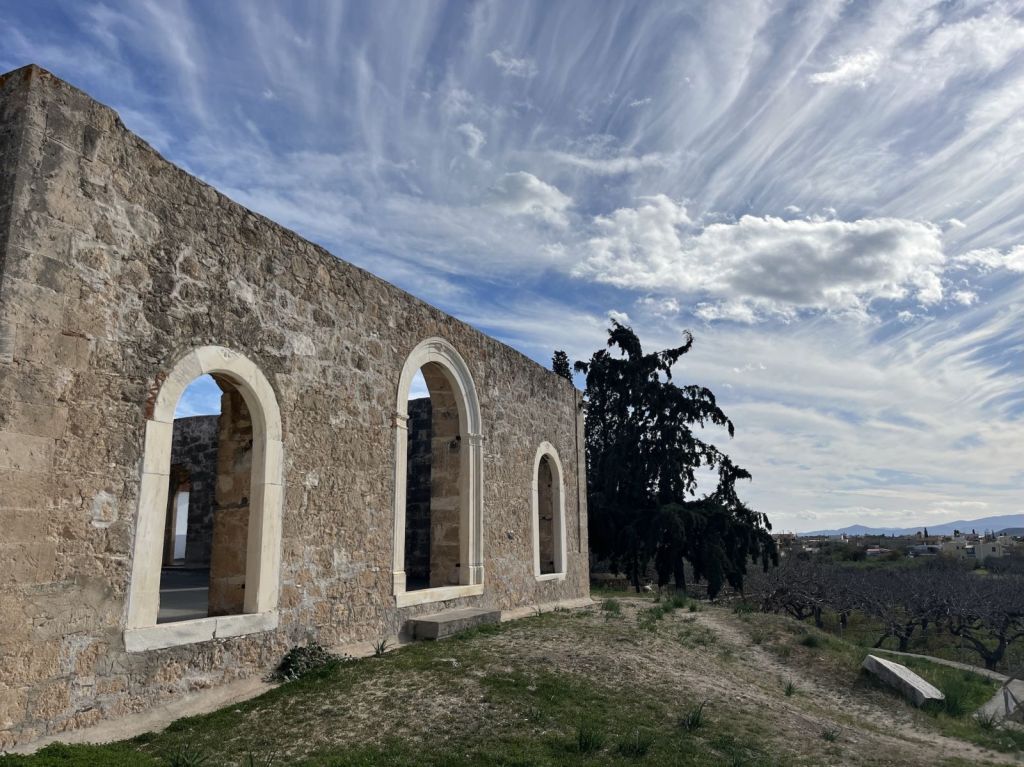
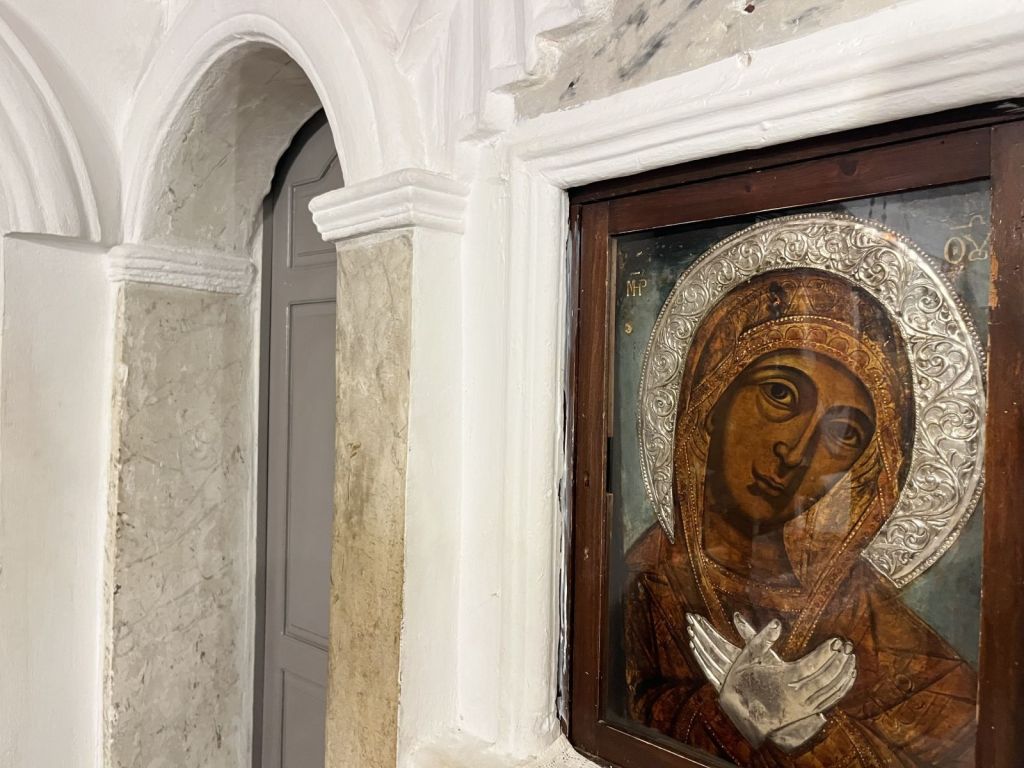
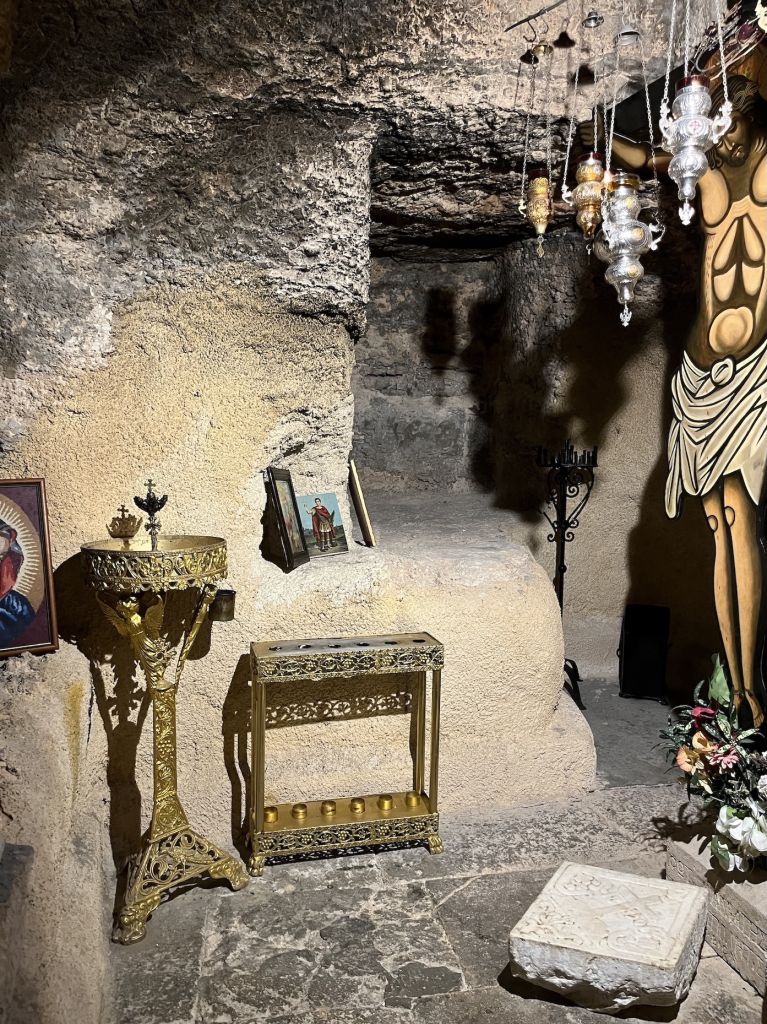
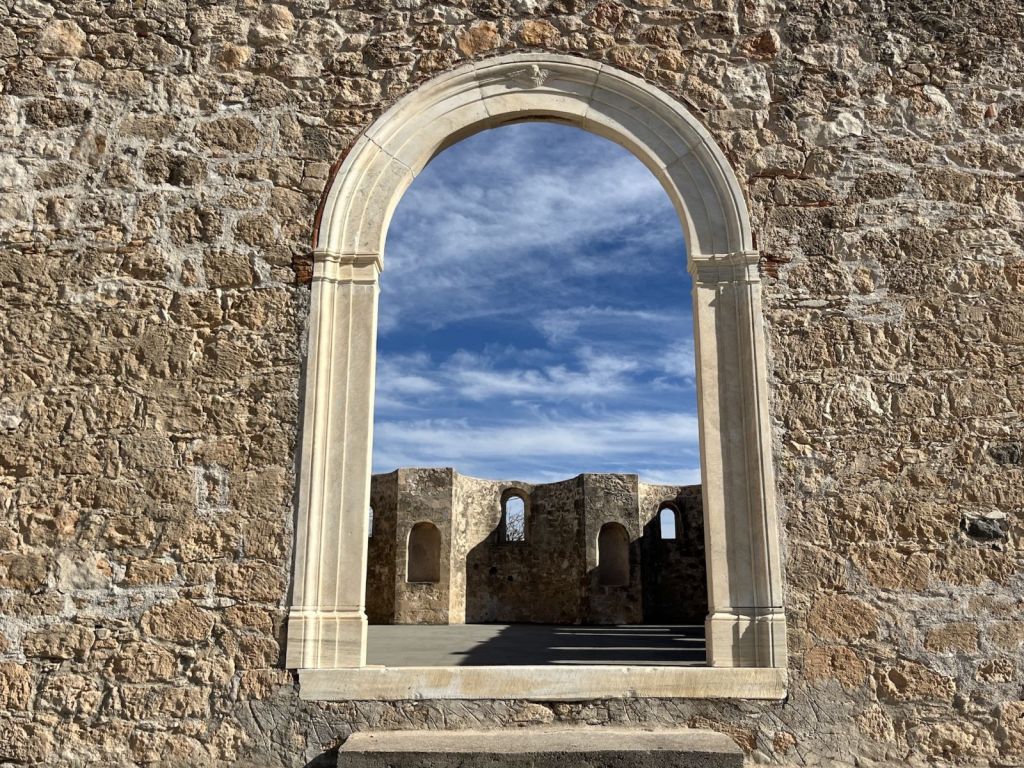
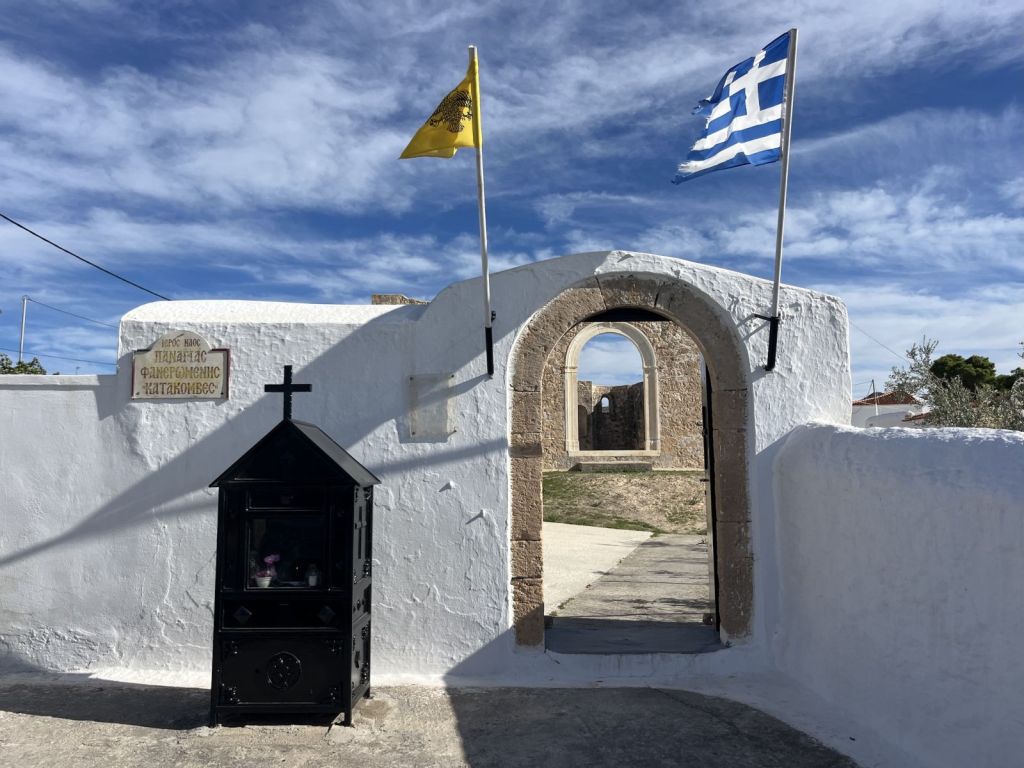
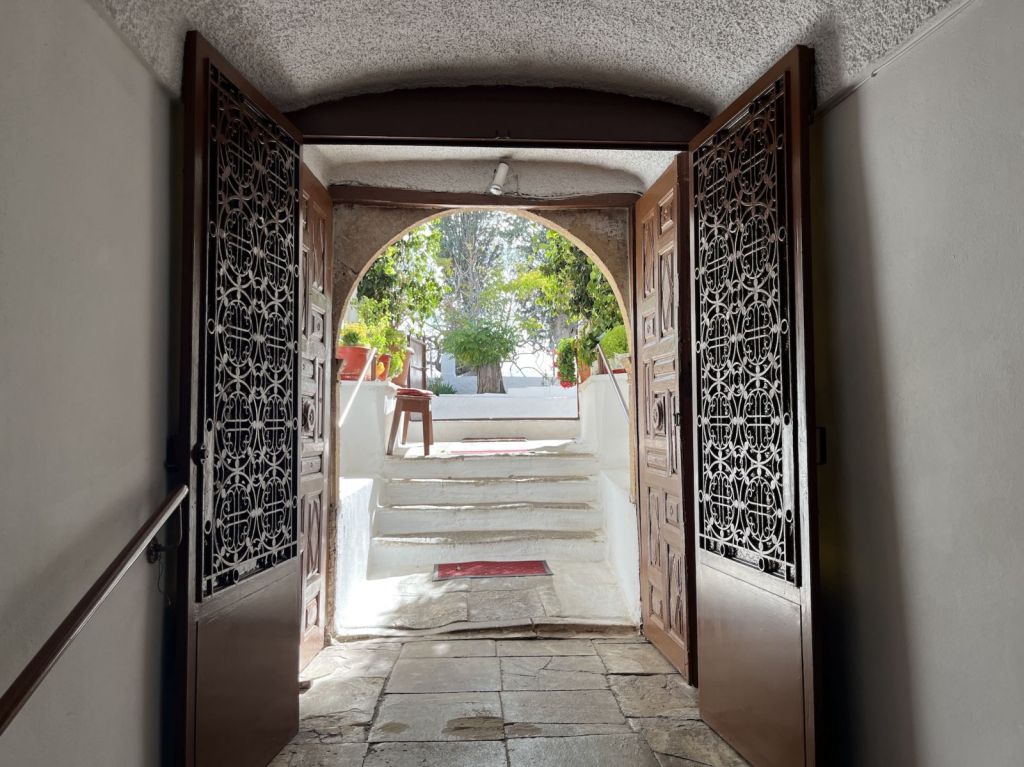
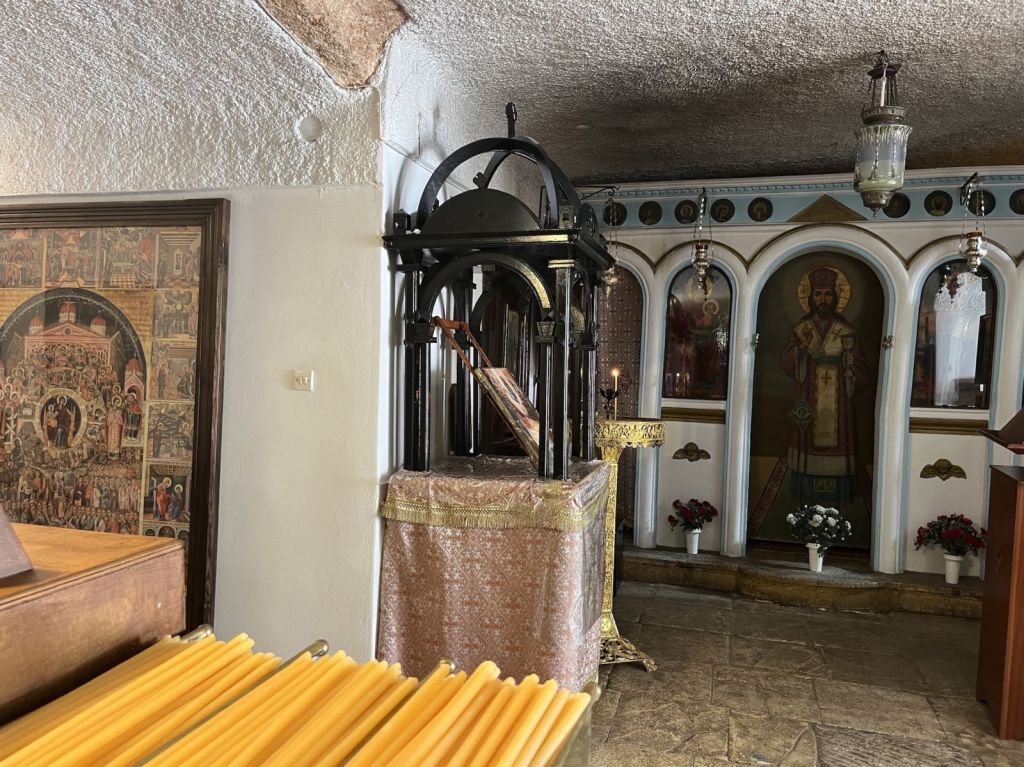
Outside the main town, a wonderful find is the Catacomb Church of Faneromenis. Surrounded by pine trees, the upper Byzantine church stands in atmospheric ruins. Below it, a whitewashed cave chapel filled with candles and icons opens into early Christian catacombs – stone-cut chambers pierced by a shaft of daylight from a hole at the top.
A knowledgeable guardian gives thoughtful explanations and insights – sadly only for Greek speakers, but pretend you can understand. It gives him great joy and then you can drop some euros into the collection box and light a few candles for your loved ones.
Day 10 – The Pistachio Heritage of Aegina
Pistachio Landscapes & Harvest Traditions
Devote a day to Aegina’s most famous agricultural treasure: the pistachio. Mesagros is the main pistachio-growing village, where low, twisting pistachio trees grow in red volcanic soil bordered by dry-stone terrace walls. Orchards stretch across gentle hillsides, many with views towards the sea.
Harvest takes place from late August to early September. Branches are shaken with long poles, so the ripe pistachios fall onto cloths spread beneath the trees. The thin outer hull is then quickly removed, and the nuts are laid out to dry in the sun for several days.
Pistachio Products & Local Specialities
The pistachio cooperative of Kipseli produces an impressive range of products from the PDO-protected Aeginan pistachio. You can sample:
- Fresh roasted pistachios (plain, salted, lemon-salted)
- Pistachio butter (absolutely addictive)
- Pistachio pesto
- Honey blended with crushed pistachios
- Pralines
- Nougats
- Spreads
- Sweet green pistachio liqueur
Aegina Town is full of specialty shops devoted almost entirely to pistachio-based sweets from baklava to the Greek childhood heaven of Gliko tou koutaliou – spoon-sweets or Greek childhood heaven.
A Bonus for September Visitors – Aegina’s Pistachio Festival
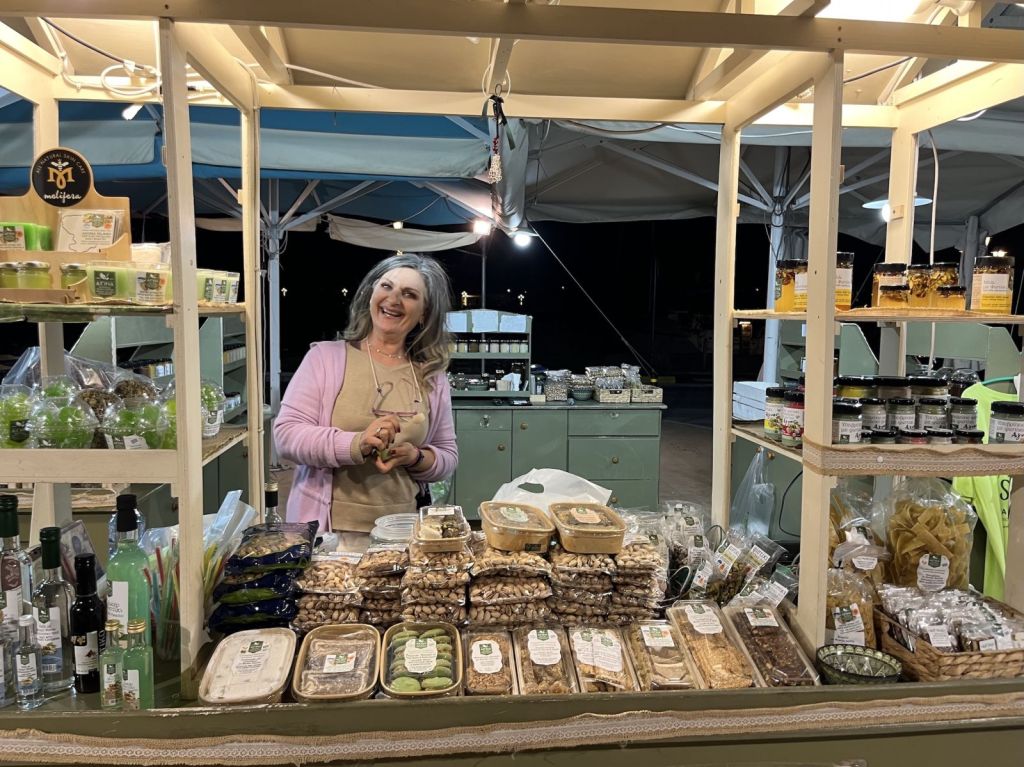
The Fistiki Fest is Aegina’s most beloved annual celebration, held every September to honour the island’s world-famous PDO Aeginetan pistachio. The harbour and old town transform into a colourful celebration of Aegina’s culture, history, and agricultural tradition. The festival is a showcase of creativity and flavour. There are pistachio treats in every imaginable form, which I listed above.
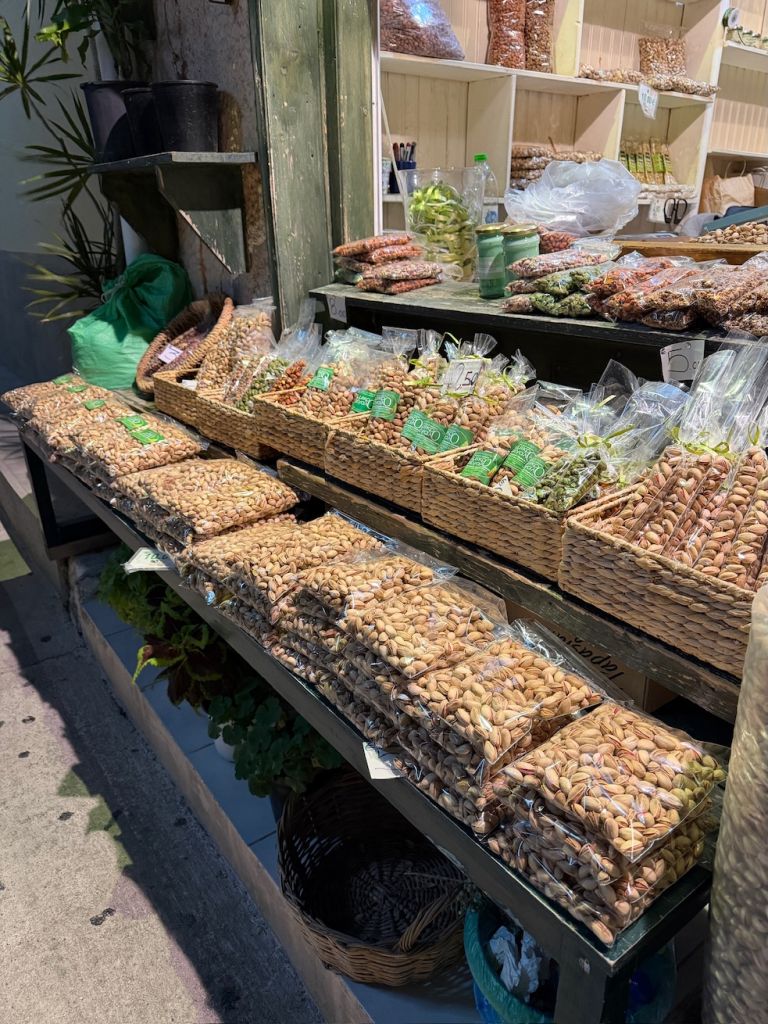
Stalls on the harbour lining the waterfront are decorated with pistachio branches, live music fills the air while locals and visitors stroll between stands, and the scent of roasted pistachios is everywhere.
To give your sugar levels a rest, there are less calorific displays of raw pistachios from different orchards, demonstrations of harvesting and drying techniques, information panels explaining PDO status and pistachio history, and tools used in traditional pistachio production.
Beyond the pistachios, Aegina’s artistic community brings the festival to life with art exhibitions inspired by pistachios and Aegina’s landscapes. You’ll also find handmade ceramics, jewellery and textiles, live painting and open studios, and photography exhibitions showing orchards, harvests and rural life.
Chefs from across Greece present pistachio-based recipes. These include pistachio-crusted fish, pistachio risottos and salads, and all the usual and less usual cakes, pastries and desserts. Cooking enthusiasts can pick up recipe cards to try them at home.
The evenings are a time for traditional Greek dance groups, folk musicians, modern bands and children’s puppet performances. You might even catch an iconic “Karayiozi” puppet show here.
Some years also feature a rather wonderful illuminated Pistachio Boat Parade with fishing boats decorated in lights and pistachio motifs gliding across the harbour.
The Real Deal
You may now be wondering what this has to do with orthopedic shoe shops and children’s clothes stores – well, the magic of Aegina is that with all these treasures, all this heritage and all this charm, it remains primarily a community of farmers and tradespeople.
They still ask “How do you like our island?” with genuine curiosity and humility, they have not Disneyfied their home to serve the god of tourism, nor has it occurred to anyone to open a Louis Vuitton or Nobu here.
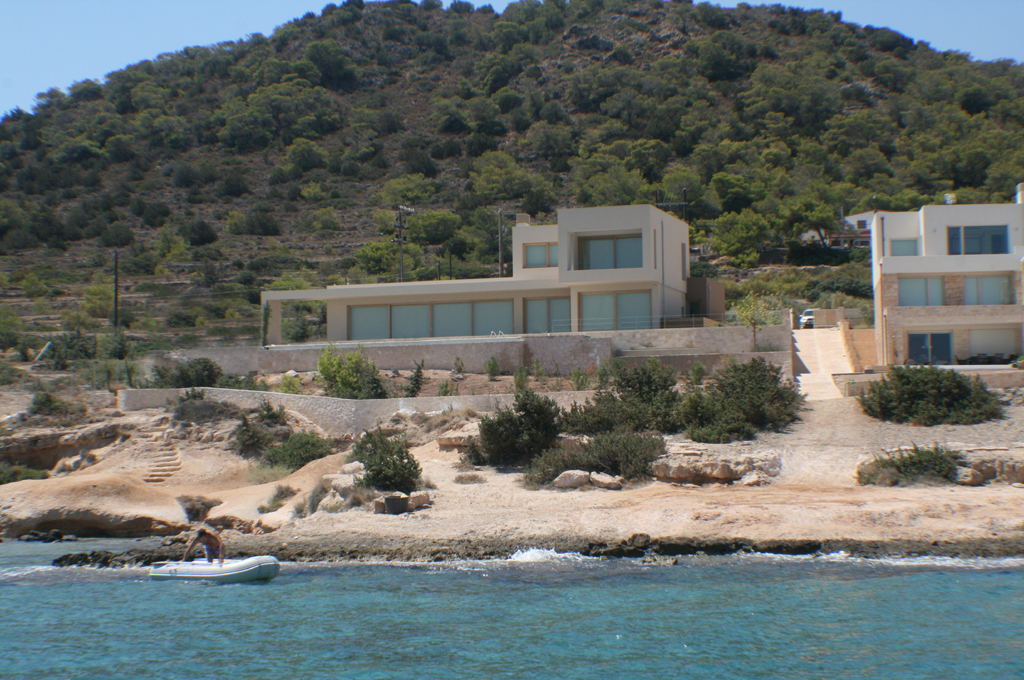
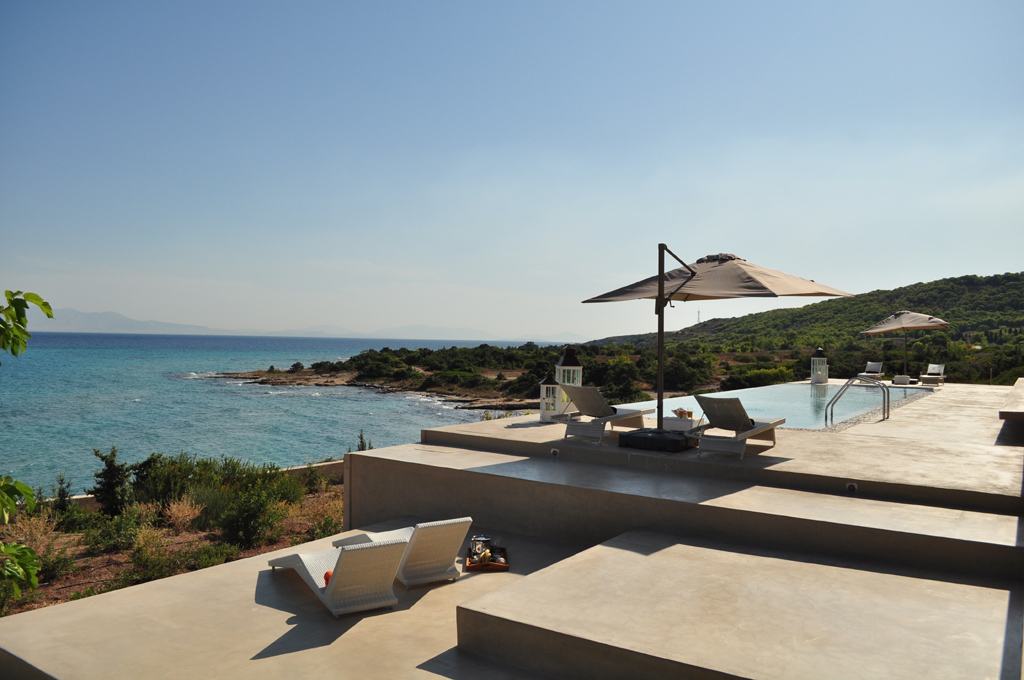
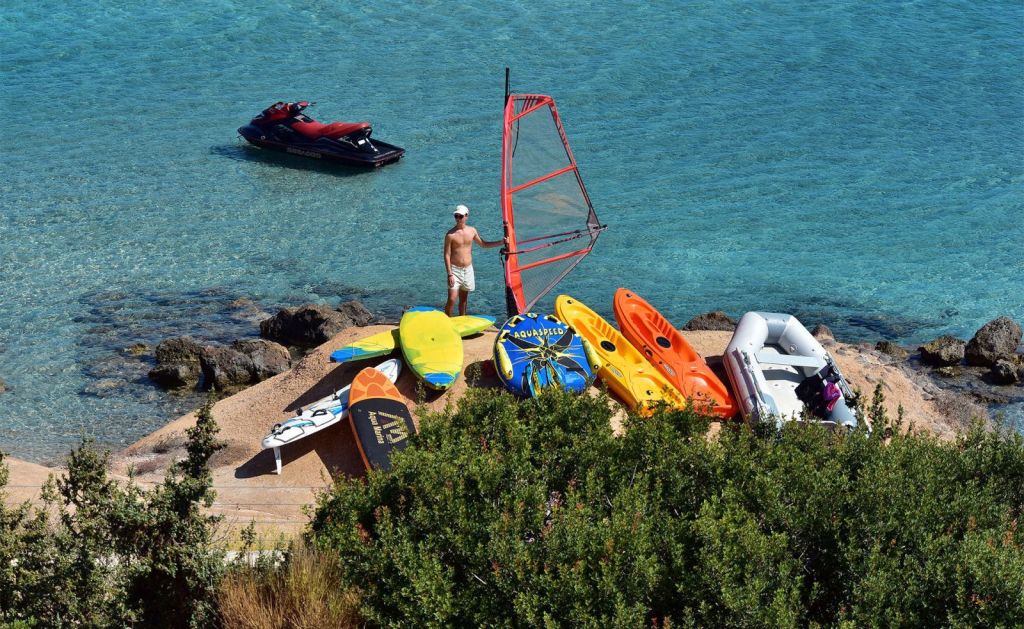
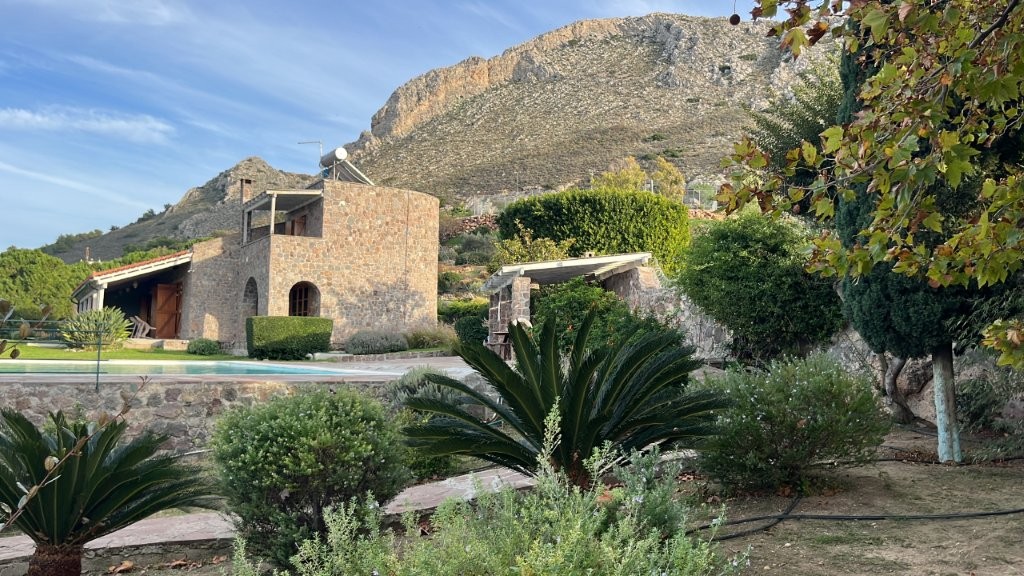
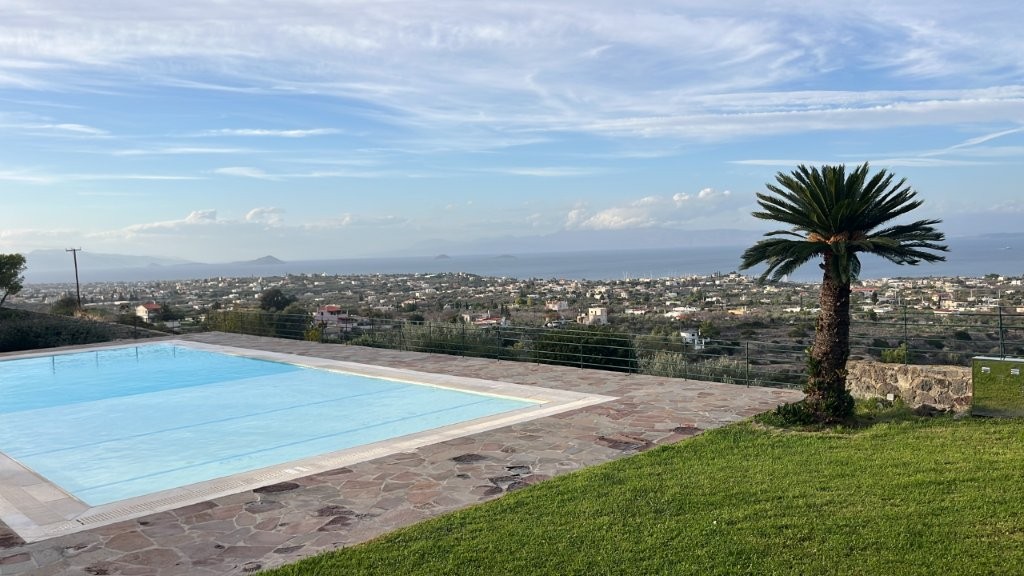
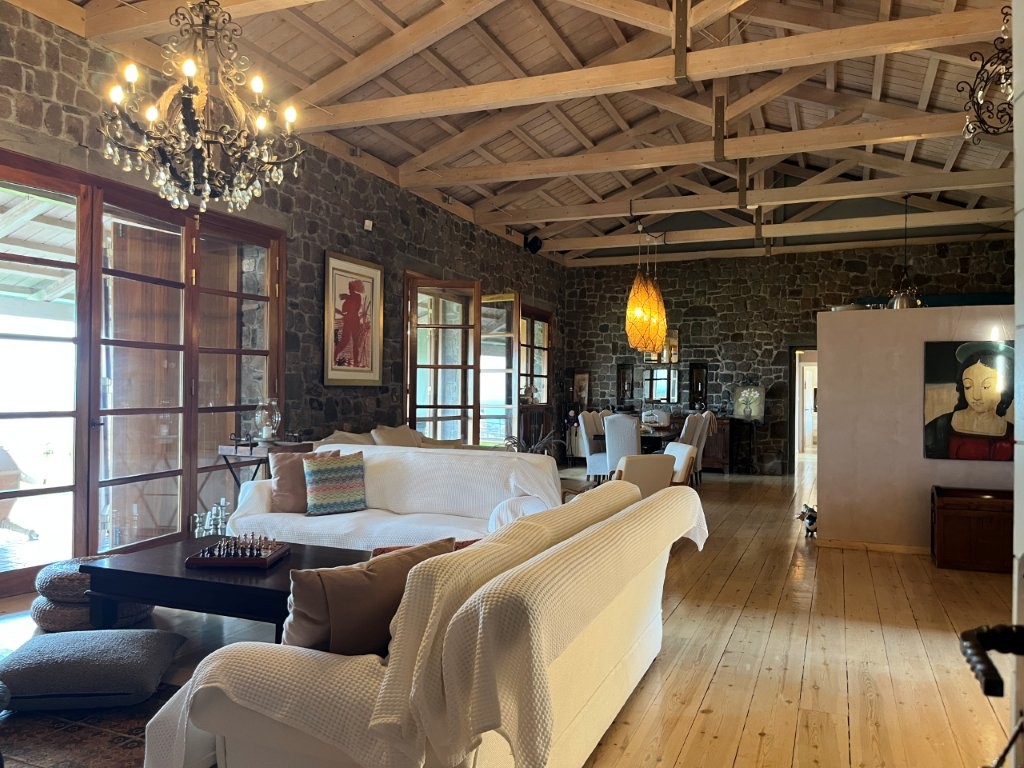
Long may that last, and if you have bunions or hammer toes, fancy a pistachio ice-cream, need some more Pthalo blue acrylic paint (so much blue sky and sea to paint), or a child’s party outfit, your stay on the island in one of our luxury villa rentals in Aegina will be perfectly complete.
If this way of travelling resonates, you’ll find more of the same in our travel blog, where we share further insights into places that still feel quietly, confidently themselves.
FAQs
Where is Aegina?
Aegina is a Saronic Gulf island located about 27 km (17 miles) from Athens, easily reached by a ferry in 40–75 minutes.
What is Aegina best known for?
Aegina is best known for the Temple of Aphaia, its PDO-protected pistachios, neoclassical harbour town, and pilgrimage sites.
How do you get to Aegina from Athens?
Frequent ferries depart from Piraeus to Aegina Town and Agia Marina. High-speed ferries take around 40 minutes, whereas conventional ferries take roughly 1 hour to an hour and 15 minutes.
What are the top things to see on Aegina?
The top things to see on Aegina are the Temple of Aphaia, Aegina Town, Agios Nektarios Monastery, Paleochora, and Moni Island.
When is the best time to visit Aegina?
The best time to visit Aegina is April–June and September–October as they offer mild weather and fewer crowds – the Pistachio festival also takes place in September. July and August are hot and busy, so they’re ideal for beach holidays. It depends on what type of experience you want on your visit.
Is Aegina good for families?
Absolutely. The beaches are calm and shallow, whilst the villages are relaxed and walkable for little ones.
Are there good walking and hiking routes?
Yes, there are some amazing walking routes in Aegina. Trails around Aphaia, Paleochora and Mount Oros are particularly rewarding.
Does Aegina get crowded?
The weekends and summer can be busy in Aegina. If you want a quieter experience, weekdays and shoulder seasons remain peaceful.
Our team of travel experts are ready to help locate the perfect villa or yacht for your needs.
About the author

Other Blog Posts You Might Like
From our blogAs seen in...













Subscribe to Our Blog